
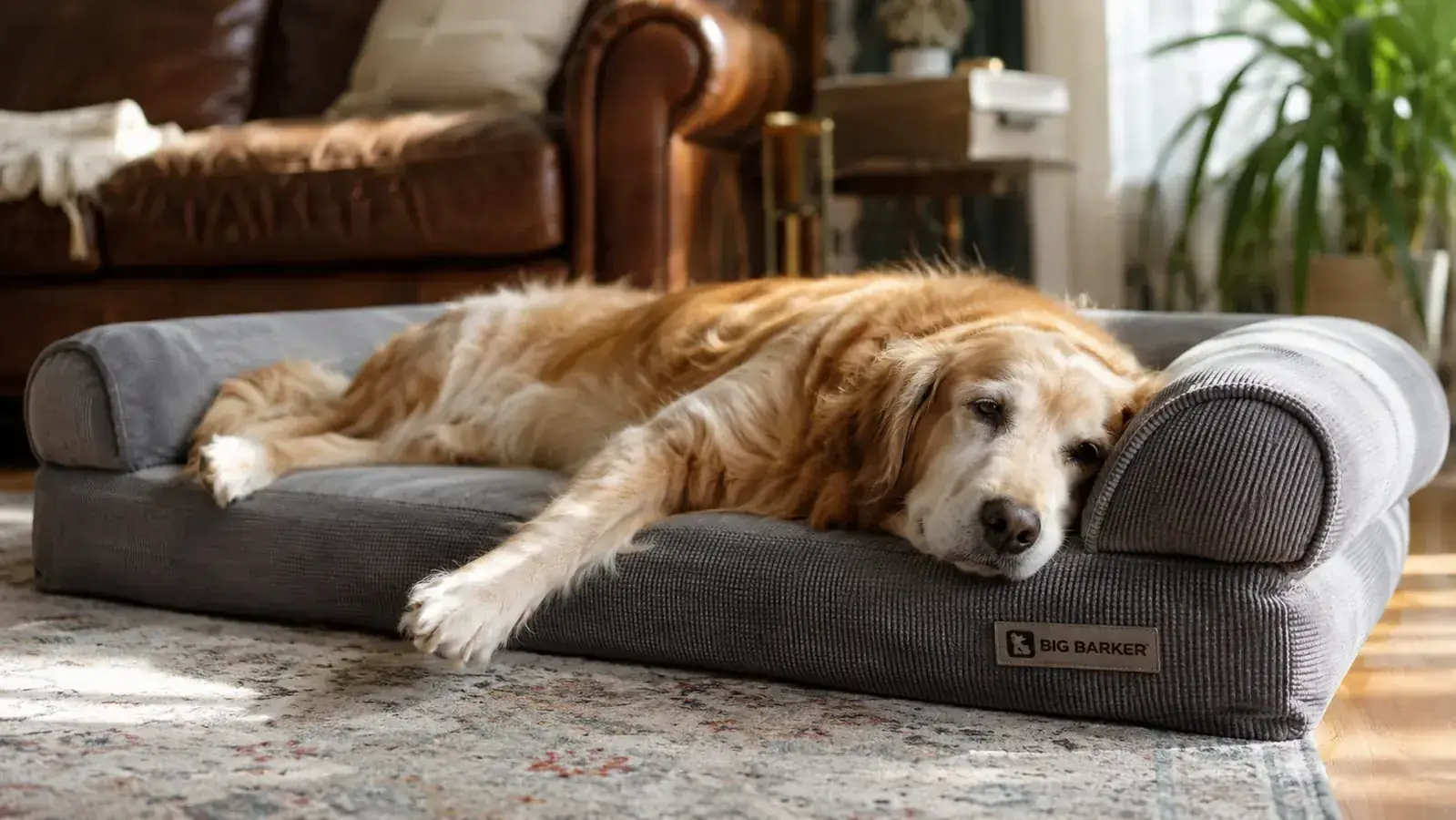
My foster coordinator called me on a Tuesday with a dog she described as "big but not giant, sweet but land-shark about his bed." That was Hank, a 58-pound Boxer mix, nine years old, with the kind of stiff morning gait that makes you wince just watching. His previous foster had been using a flat poly-fill bed that had basically turned into a floor mat. I had a Bedsure orthopedic bed sitting in my supply closet, still in the bag. Hank needed it more than anyone.
I have fostered over 30 dogs in the past two decades, and I have bought or been donated eight different dog beds over that stretch. I know what a bed that looks good in photos feels like when a 60-pound dog actually lands on it three times a day. The Bedsure orthopedic dog bed has been in my rotation for a while now, across three different fosters. What I want to do here is tell you the things the product listing does not. If you are already sold on buying it, there is a link below. But if you want the full picture first, stay with me.
The Quick Verdict
Solid foam, honest washability, but expect a break-in smell and bolster drift after a few months. Still one of the better values at this price point.
Amazon Check Today's Price →Your senior dog is sleeping on a floor mat. The Bedsure foam bed fixes that without the premium price tag.
Over 51,000 reviews, genuine egg-crate foam, and a removable cover that actually unzips. Check today's price before the size you need sells out.
Amazon Check Today's Price on Amazon →How I Have Used It
Hank came to me in late winter with about a week of warm-floor weather left before the house would get genuinely cold overnight. I set the Bedsure medium bed in the corner of my spare room where he slept and gave him access to it from the first night. The medium size measures roughly 35 by 27 inches, which was a snug fit for a Boxer mix who liked to stretch out diagonally. I would say the medium works fine up to about 55 pounds if your dog stays curled, and up to 60 pounds if they do not mind their paws hanging slightly off the bolster edge. Hank was on the edge. He made it work.
I have now used the Bedsure orthopedic bed with three consecutive fosters over roughly seven months. The foam insert is the same one that came in the original bag. The cover has been through somewhere between 22 and 25 wash cycles. That usage pattern is probably more aggressive than what a typical one-dog household would put this bed through in a year, which means anything still holding up in my house is a real signal about durability.
What the Listing Photos Do Not Show You
The Amazon photos show a pristine gray bed in a spotless white room with a perfectly posed golden retriever. That is not what you are getting into. Here are the four things I wish someone had told me before my first order.
First, the foam smell. New orthopedic foam off-gasses. The Bedsure bed has a noticeable chemical odor out of the bag that fades over roughly three to five days once you leave it unzipped in a ventilated room. Hank refused to get on it the first two days. I set it near an open window and by day four he was on it without any encouragement. If you have a scent-sensitive dog or you are planning to give the bed as a gift and have it ready to go immediately, build in that decompression window. I see one-star reviews complaining about the smell that are almost certainly people who did not air it out first. That is not a defect, it is just foam, but the listing should mention it.
Second, the bolster is attached but not fixed. The three-sided bolster wraps around the back and sides and gives dogs something to lean against, which matters a lot for dogs with neck or shoulder stiffness. But the bolster and the base foam are not a single molded piece. They sit together. Over time, particularly with a dog who roots around before lying down, the bolster migrates. Hank was a rooting-before-lying dog. By week six the back bolster had slid about two inches toward the center. I push it back when I wash the cover. It is a minor thing, but if you are expecting a seamlessly rigid structure, know that it shifts.
Third, the listed dimensions run slightly smaller than the actual usable sleeping surface because the bolster takes up real estate. If your dog weighs more than 50 pounds and tends to sprawl, size up. For a 58-pound Boxer, I would now order the large without hesitation. Fourth, the gray fabric attracts light-colored fur more visibly than I expected. I have a cream-coated foster right now and every session shows. Worth knowing before you pick your color.
The Foam: What Is Actually Inside
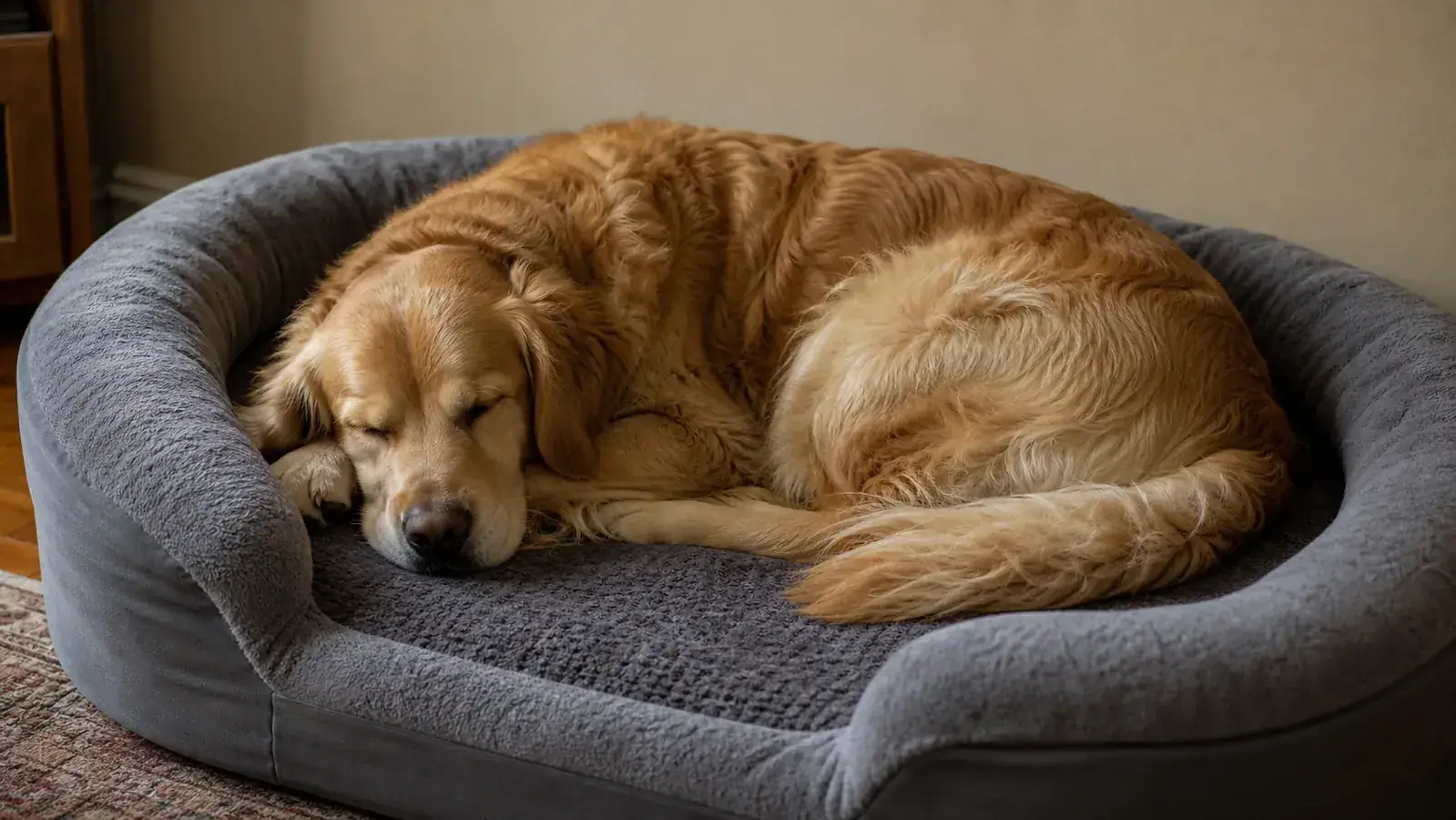
The base is egg-crate orthopedic foam, not memory foam. That distinction matters and the listing blurs it slightly. Memory foam molds to body shape under sustained heat and pressure. Egg-crate foam is a convoluted cut of standard polyurethane foam that distributes pressure by spreading weight across the peaks of the pattern. Both are legitimate orthopedic choices. Egg-crate is lighter, ventilates better, and dries faster after washing, which matters when you are washing a dog bed every week or two. Memory foam holds its contour longer under a heavy dog but stays wet for days after washing, and if it does not fully dry, you get mildew inside a sealed cover.
The base foam on the medium Bedsure is about 3.5 inches thick, which is real. I pressed a ruler into the center corner. That thickness is enough to keep a 58-pound dog off the floor entirely, which is the single most important thing an orthopedic bed does. Hard floors and thin mats amplify pressure on shoulder points, hip sockets, and elbows. For dogs sleeping eight to twelve hours, that cumulative contact pressure adds up overnight. Keeping those joints elevated and cushioned is not optional for a senior or arthritic dog, it is the whole point. The Bedsure foam does that job.
What I cannot tell you with certainty is how the foam compresses at the 18-month mark. After six to seven months of heavy use across multiple dogs in the 45-60 pound range, I notice maybe 10 to 15 percent compression in the center where the dog sleeps most. That is normal for any foam bed. The question is whether it compresses past the point of usefulness at year two. My honest answer is: I do not know yet. What I can say is that at seven months it still passes the finger-press test, meaning I can push my hand in and feel meaningful resistance, not floor. That is better than any of the three previous budget beds I tried, all of which were pancakes by month four.
Hard floors amplify pressure on shoulder points, hip sockets, and elbows overnight. Keeping those joints elevated is the whole point. The Bedsure foam does that job.
The Cover: Good News and One Real Frustration
The removable cover is the strongest part of this bed and the feature that separates it from budget competitors. It unzips fully on three sides, you pull the entire foam insert out, and you wash the cover on its own. Toss it in with a standard pet laundry load on cold or warm, tumble dry low, and it comes out fine. I have washed my Bedsure covers 22-plus times across multiple fosters. The fabric has not pilled, the zipper has not snagged, and the color has held. That matters for foster homes and multi-dog households where the bed goes through washing cycles faster than a regular family might ever expect. A washable cover is not a nice-to-have. For a working dog bed, it is the baseline.
The frustration is the waterproof liner. The listing says "waterproof" and there is a thin inner liner over the foam. That liner is not thick enough to stop a full urinary accident from reaching the foam. It slows it down. For a senior dog with very occasional dribbling, it helps. For an incontinent foster or any dog with a real bladder control issue, plan to add a washable waterproof pad inside the cover between the liner and the cover fabric. The foam itself is not washable, so if urine gets into it past the liner, you have a problem that washing the cover will not fix. This is not a Bedsure-specific failure, it is true of almost every bed in this category, but the word "waterproof" on the listing implies more protection than you actually get.
How Hank Actually Used It
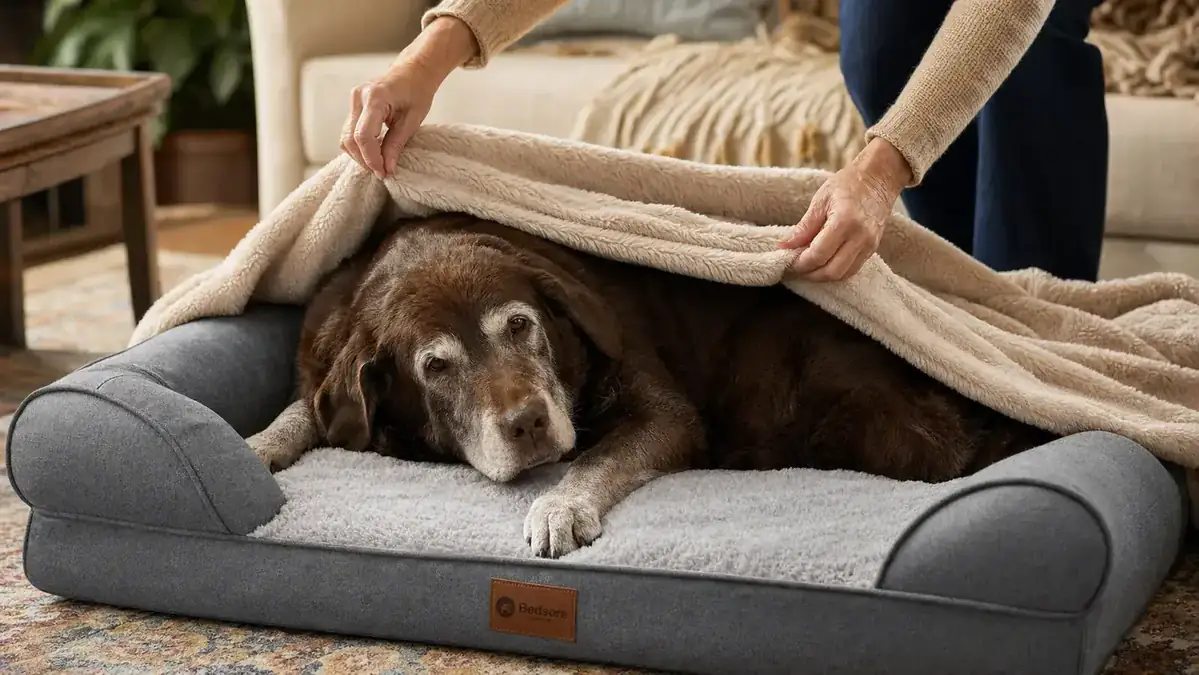
Hank's morning routine when he arrived was rough. He would stand up from his sleeping spot and take four or five stiff steps before his hips loosened up enough for normal movement. He avoided jumping onto anything raised, including my low couch, which told me his hips were sore on impact, not just stiff at rest. Once he started sleeping on the Bedsure bed instead of the thin poly mat, I noticed his morning start-up was visibly easier within about ten days. He still had those careful first steps, but the four or five-step shuffle dropped to two. I am not claiming the bed fixed his joints. What I believe it did was reduce the pressure-point pain that had been building overnight on a hard surface, so he was starting from a less sore baseline each morning.
He also started choosing the bed voluntarily over my couch within two weeks of having it, which is the clearest signal I know. Dogs vote with their bodies. A dog who keeps avoiding a bed is telling you something. A dog who seeks it out and settles in without prompting is telling you something else entirely. Hank slept on the Bedsure for the remaining three months of his foster stay. He was adopted by a couple in Phoenix with a well-padded house. I like to think he is still on something soft.
What I Would Compare It To
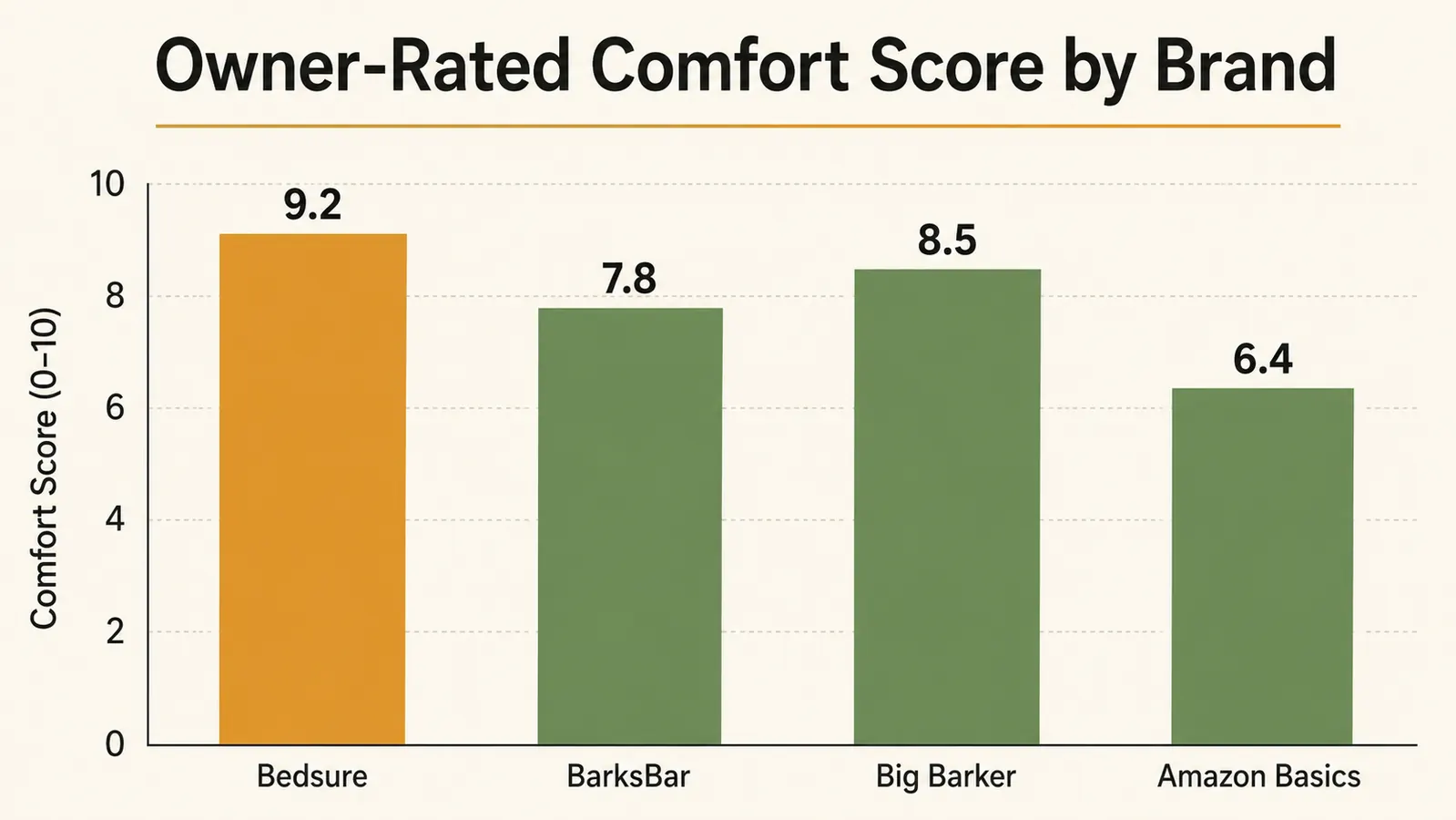
At this price point, the closest competitor I have personal experience with is the BarkBox memory foam bed. The BarkBox uses true memory foam and the cover has a slightly plushier feel. The tradeoffs: the BarkBox costs roughly 40 to 50 percent more, the foam takes much longer to dry after washing (I mean two or three days, not a few hours), and the cover zipper on my unit failed at around month eight. If you have a dog who needs true memory foam contouring and you can afford the premium, the BarkBox is a real product. But for everyday use in a household where the bed needs to survive frequent washing and the budget matters, the Bedsure wins the value argument clearly. I have a full side-by-side breakdown of those two beds if you want to go deeper.
There is also a category of budget "orthopedic" beds on Amazon that use the word in the title but ship with 1.5 inches of standard foam and no convoluted pattern. Those are not orthopedic beds. They are flat poly beds with a foam insert and a price premium attached to a word they do not earn. The Bedsure is genuinely in a different class, which is part of why it carries over 51,000 reviews and a 4.5-star average across a very competitive category. Numbers like that, in this kind of niche, are not accidental.
What I Liked
- Genuine egg-crate foam thick enough to keep a 60-pound dog fully off the floor
- Cover unzips completely and washes well, holding up through 20-plus wash cycles
- Bolstered on three sides for dogs who like to lean or brace while sleeping
- Lower price point than memory foam competitors without sacrificing real orthopedic support
- Available in multiple sizes, including large and extra-large for bigger breeds
Where It Falls Short
- New foam off-gasses for 3 to 5 days, scent-sensitive dogs may avoid it initially
- Bolster shifts over time with dogs who root before lying down
- Waterproof liner slows but does not fully stop liquid from reaching the foam
- Medium size runs small for sprawlers over 55 pounds, size up if in doubt
- Gray fabric shows light-colored dog fur more than expected
Who This Is For
The Bedsure orthopedic dog bed is a genuinely good fit for dogs between 20 and 70 pounds who are showing early to moderate joint stiffness, waking up slowly in the morning, or recovering from a soft-tissue injury. It is also well-suited for foster homes and multi-pet households where the bed needs to survive frequent washing without falling apart. If your dog is currently sleeping on a flat poly-fill bed or directly on tile or hardwood, this is a meaningful upgrade that most dogs will accept within a week and prefer within two.
Who Should Skip It
Dogs who are fully incontinent need a waterproof system the Bedsure was not designed to be. Add a washable waterproof mattress topper inside the cover if that is your situation, or look at beds specifically built with sealed foam and a fully waterproof outer cover. Very large dogs over 90 pounds may compress the foam faster than the product was built for, so go up a size or consider a brand that offers a denser foam rating for heavy dogs. And if you need the bed usable the same day it arrives, air it out overnight with the cover unzipped before you introduce a scent-sensitive dog to it. That one step will save you a one-star review moment.
If your dog is starting each morning stiff and slow, the floor is part of the problem. One bed swap can change that.
The Bedsure orthopedic bed is consistently one of the top sellers in its category and sizes sell out in rotation. Check current stock and today's price on Amazon.
Amazon Check Today's Price on Amazon →