
My rescue shepherd Daisy started limping off her old polyfill bed every single morning about two years ago. She is eleven, and her vet confirmed mild hip dysplasia back in 2023. I thought any dog bed labeled 'orthopedic' would help. I was wrong. I bought three different ones before I figured out what actually matters, and by 'what matters' I mean specifics you can check before you pull out your credit card. If your dog is stiff getting up, hesitates before lying down, or favors a leg after resting, this guide is for you.
The word 'orthopedic' on a dog bed label has no legal definition. A manufacturer can print it on a two-inch slab of hollow polyester fill and charge a premium. I learned that the hard way. What you actually want is memory foam or high-density base foam that does not collapse under your dog's heaviest pressure points. Finding that requires knowing what to look for, and that is exactly what these five steps walk you through.
Already know you need a quality orthopedic bed? The Bedsure foam bed is what I landed on after those three failed attempts.
It has a waterproof inner liner, a removable machine-wash cover, and thick enough base foam to actually support a mid-to-large dog with joint issues. Over 51,000 Amazon reviews back that up.
Amazon Check Today's Price on Amazon →Step 1: Confirm the Foam Type Before You Buy Anything
The first thing I check now is whether the product listing actually names the foam. Memory foam and high-density support foam are the two workhorses. Memory foam conforms to your dog's body and redistributes pressure away from the hip and elbow joints. High-density base foam does not have that same contouring feel, but when it is dense enough, it provides a firm, stable surface that does not let your dog sink to the floor. Some quality beds combine both: a firm base layer for support and a softer top layer for comfort.
What you want to avoid is low-density polyester fiberfill, which is the same stuff in a throw pillow. It compresses within days. For a joint-compromised dog, that means they end up lying on something only slightly cushioned above the hard floor. Test density by pressing your palm flat into the foam and holding it for five seconds. If the surface does not slowly spring back, the foam is too soft. If it gives no more than an inch before firm resistance, that is what you want.
For Daisy specifically, I was looking for at least three inches of total foam depth. Her vet mentioned that for a 65-pound dog with hip dysplasia, two inches or less will not provide enough lift off the floor to meaningfully reduce joint loading. The Bedsure orthopedic bed I eventually went with uses a comfort foam base layer that held up under her weight without pancaking, which I verified by sitting on it myself before she got to try it.
Step 2: Size the Bed for Your Dog's Actual Resting Length
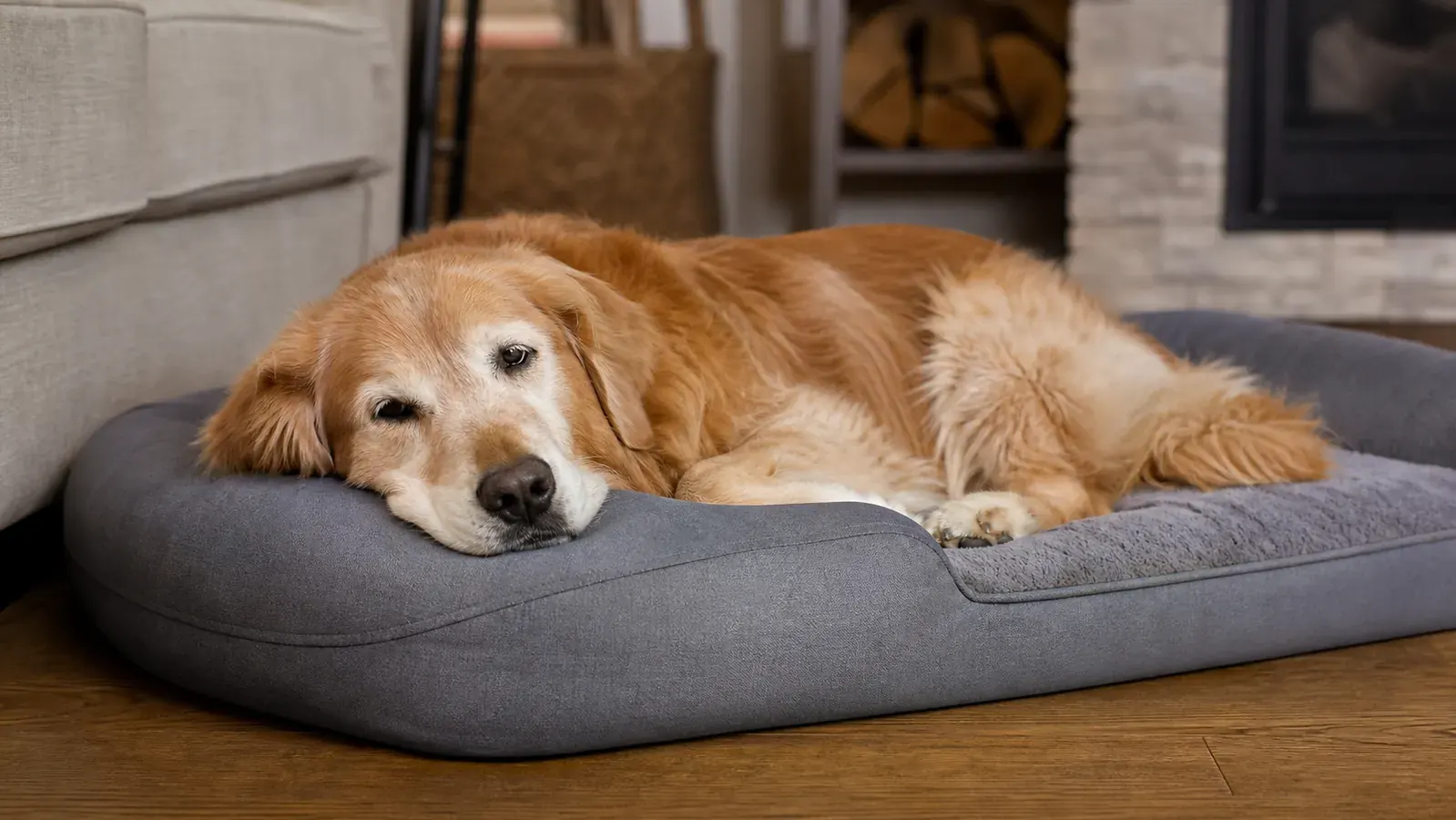
Dogs with joint pain tend to stretch out fully when they rest because curling up puts pressure on arthritic hips and elbows. My Daisy went from a compact little curl sleeper to a full-sprawl sleeper once her hips started bothering her. That meant her old medium bed was suddenly too short, even though it fit her body weight perfectly.
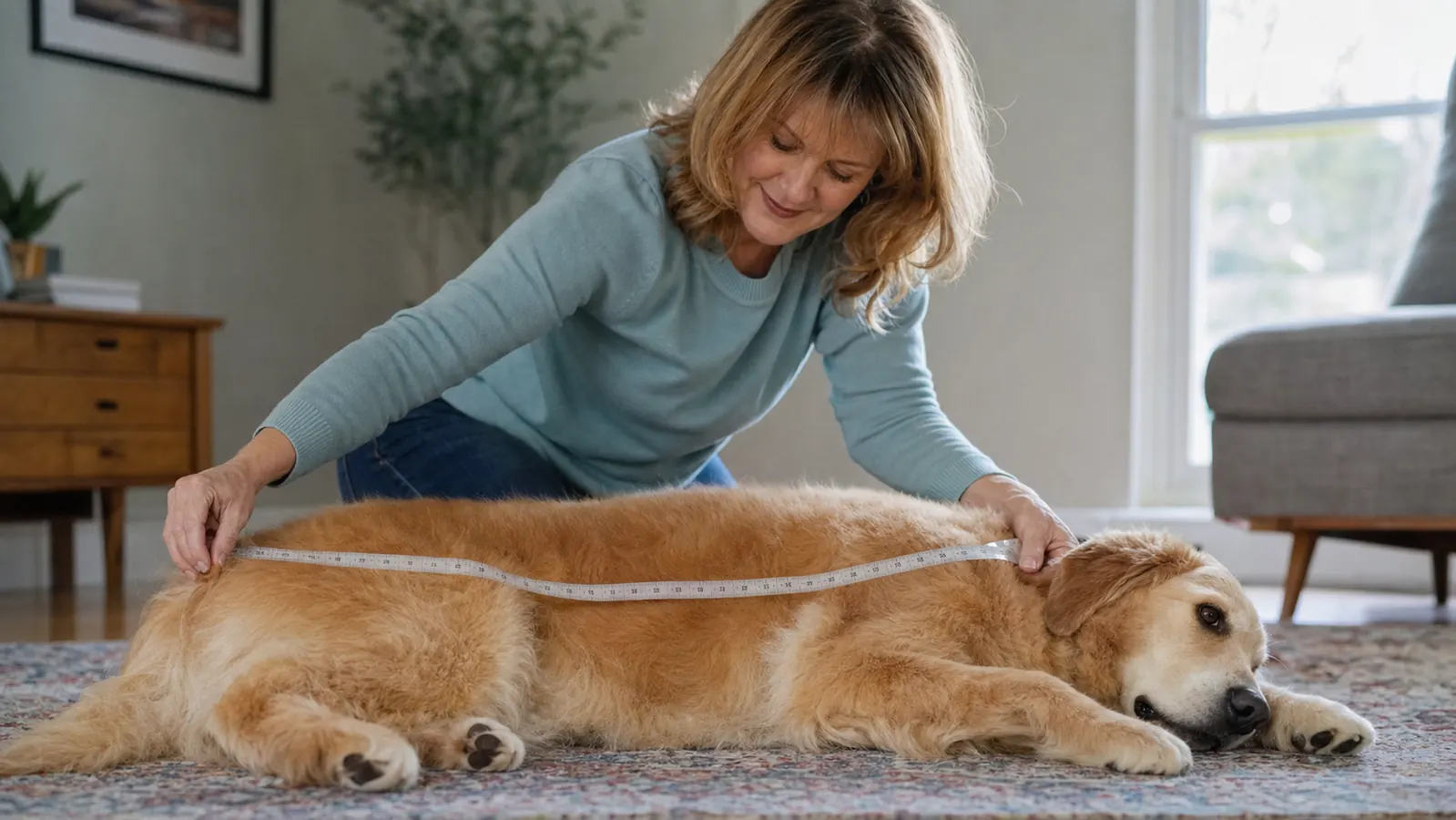
Measure your dog from nose to tail base while they are lying in their natural rest position. Add about six inches. That is the minimum bed length you should be shopping for. Width should allow full shoulder extension. Most product listings give dimensions in length-by-width format, but some give them reversed, so read the description carefully and compare against your measurement. For a 65-pound shepherd mix, I went up to a large size even though most 'medium' beds claim to fit dogs up to 70 pounds. The weight limit refers to durability, not to comfort dimensions.
If you have a multi-dog household, resist the temptation to size down and let two smaller dogs share one bed. Dogs with joint issues need to be able to reposition freely during the night, and a second dog taking up space on the same surface forces them into awkward positions. Each dog with joint concerns deserves their own bed, sized individually.

Step 3: Check the Entry Height for Dogs Who Struggle to Step Up
A thick foam bed is great in theory. A thick foam bed with a bolster wall your arthritic dog cannot climb over is not so great. This was my mistake with the first bed I bought for Daisy. It had four-inch bolstered sides, and she would stand at the edge and look at me with this weary expression every night. She could technically get over it, but it required a small step-up that clearly hurt her.
For dogs with hip or rear-limb issues, look for a low-entry side. Many orthopedic beds now cut one side lower specifically for senior dogs. The Bedsure orthopedic bed I eventually settled on sits low to the ground with no bolster walls at all, which made a visible difference in how willing Daisy was to walk onto it independently. Some dogs with front-limb issues (elbow dysplasia, shoulder OA) actually do better with a bolstered bed that gives them something to lean against, so think about which joints are giving your dog the most trouble before deciding.
Also factor in overall bed height. A bed that sits six or more inches off the ground can itself become a problem for a dog with severe rear-end weakness. Lower is generally better for dogs who are already unsteady.
Step 4: Verify the Cover Is Actually Machine Washable
Dogs with joint problems tend to be older dogs, and older dogs tend to have bladder control changes, skin oils, and general messiness that younger dogs do not. If the cover is not easy to wash, it becomes a hygiene problem fast. I have made the mistake of buying a bed with a cover that was technically removable but had a zipper on the back that required me to flip the entire mattress over and wrestle with a tight sleeve. I washed it twice and gave up.
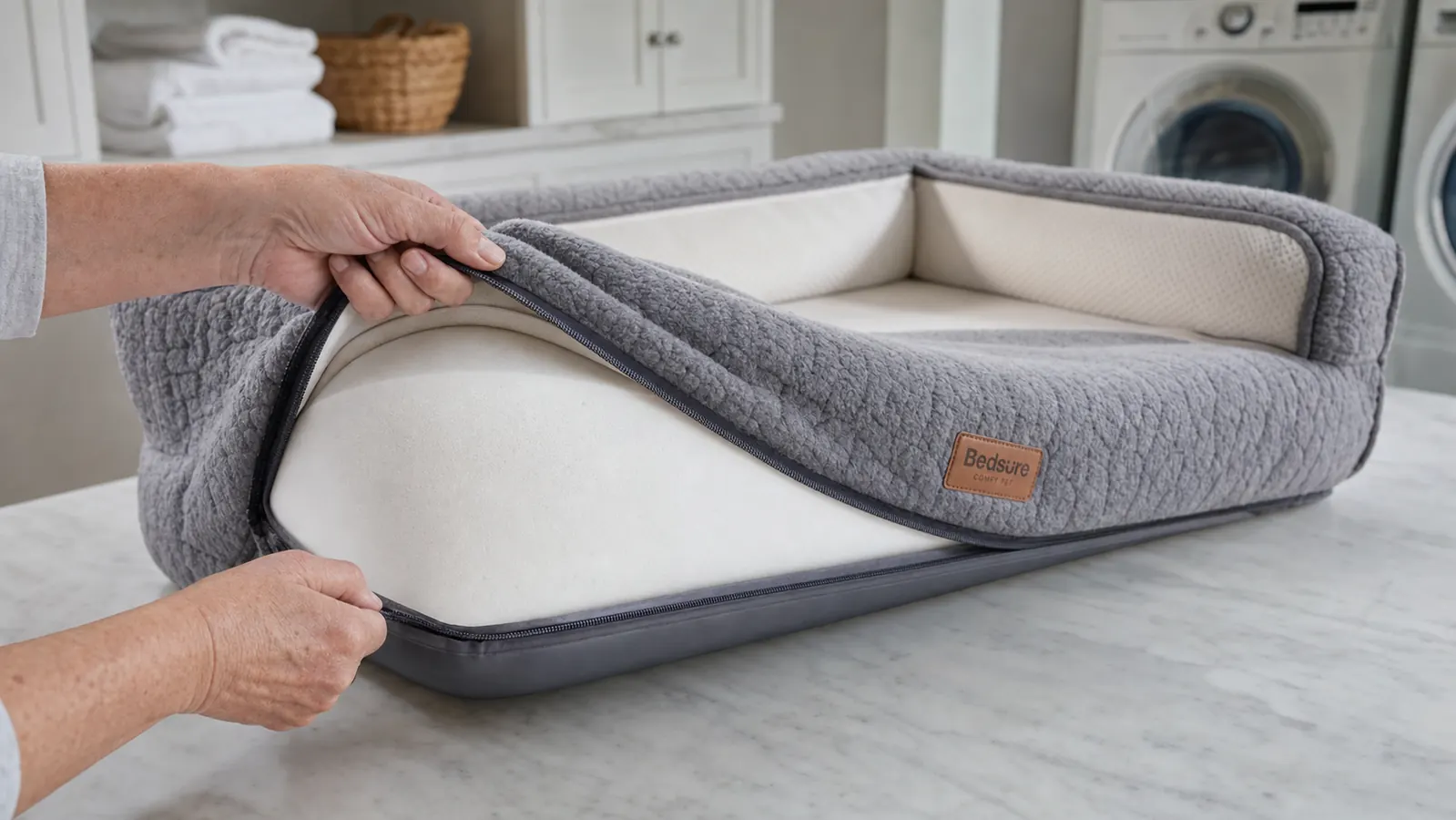
What I look for now: a zipper that goes around at least three sides of the cover, not just one edge. That makes getting the cover on and off a two-minute job instead of a ten-minute ordeal. Also check whether the inner foam itself has a waterproof liner. Most quality orthopedic beds have a waterproof inner cover that protects the foam from any accidents that leak through the outer cover. The Bedsure bed has both: a removable outer cover that zips off easily, plus an inner waterproof lining. For Daisy, who had two nighttime accidents in her first month on the new bed, that inner liner was worth the entire purchase.
Wash the cover in cold or warm water, never hot, and skip the fabric softener. Heat degrades the waterproofing on most liners. I wash Daisy's cover every ten to fourteen days or whenever she has an accident, whichever comes first. If the manufacturer says dry-clean only or hand wash only, that is a hard pass for me. Senior dogs are not clean dogs, and the cover needs to tolerate regular machine washing without shrinking or losing its shape.

Step 5: Place the Bed in the Right Spot and Give Your Dog Time to Adjust
This step gets skipped constantly. You can buy the best orthopedic dog bed available and your dog might still drag themselves back to the cold tile or their old flat blanket for the first week. Dogs are creatures of habit, and dogs with joint pain are sometimes extra reluctant to climb onto something unfamiliar because getting on and off unpredictable surfaces hurts.
Place the new bed in the spot your dog already prefers to rest, not in the spot you wish they would use. If Daisy liked the corner by the back door, that is where the bed went. Do not wash the bed before the first use; the new smell is part of why dogs avoid unfamiliar surfaces. Let your dog sniff it at their own pace. If they are very hesitant, set a worn t-shirt or a familiar blanket on top for the first few nights. Most dogs make the transition within five to seven days once they realize the new surface is comfortable.
Also think about room temperature. Cold floors accelerate joint stiffness. A bed placed near a heating vent or in a naturally warm part of the house will deliver more benefit than the same bed in a cold, drafty room. Daisy's bed is in the living room now, away from the tile kitchen floor she used to favor. She walks onto it on her own every night, which is something she was not doing eighteen months ago.
One more thing on placement: if your dog has been sleeping on a different level of the house from you and waking up stiff, consider moving the bed closer to where you sleep. Anxious or insecure dogs with pain often wake more frequently when isolated. Less nighttime movement means less early-morning stiffness from lying in one position too long.
What Else Helps
A good orthopedic bed is one piece of the joint-comfort picture for a senior dog. The bed handles the recovery period when your dog is resting, but you can reinforce that progress with a few other habits. Short, low-impact walks on soft surfaces like grass keep joints lubricated without pounding them. Swimming or water play is even better for dogs who enjoy it. Keeping your dog at a lean body weight reduces load on already-stressed joints, and your vet can tell you exactly where your individual dog should land.
A joint supplement alongside the bed change gave Daisy noticeably more comfortable mornings within about six weeks. I use Cosequin, which her vet specifically recommended, and I write about my experience with it in the long-term Cosequin review if you want the details. The bed and the supplement together were more effective than either one alone. Think of the bed as reducing the daily insult to the joint, and the supplement as supporting the joint tissue itself. If you want a broader picture of why the bed matters so much, the 10 reasons your dog needs an orthopedic bed article covers the supporting research.
She started sleeping through the night for the first time in months. I had not realized how often she was waking up and shifting until she stopped doing it.
Ramps are worth considering too. A dog who has to jump on and off furniture repeatedly during the day is undoing a lot of what a good bed does at night. A simple foam ramp to the couch or your bed costs very little and spares your dog several painful landings per day. I added a ramp to our couch about two months after switching Daisy to the new bed, and her reluctance to jump down on her own stopped almost immediately.
The Bedsure orthopedic bed ticked every box from this guide: real foam, machine-wash cover, waterproof liner, and a low profile Daisy can walk onto without help.
It comes in sizes from small up to XXL, so it fits everything from a 15-pound terrier to a 100-pound shepherd. Check today's price and available sizes on Amazon.
Amazon Check Today's Price on Amazon →