
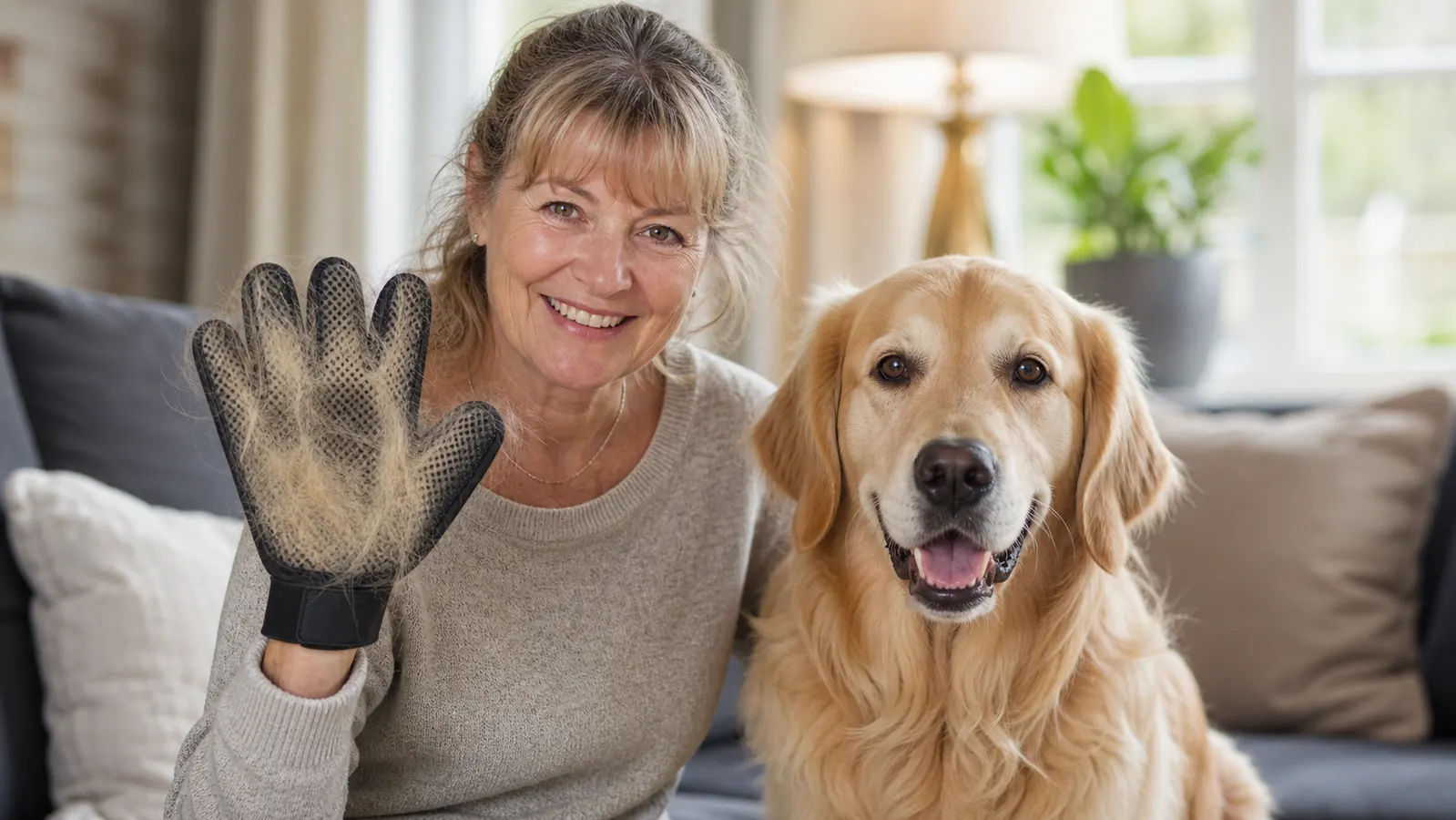
I have a confession. Before I found this brush, I was running a lint roller over my couch every single morning, vacuuming the rug every other day, and still showing up to the grocery store wearing what my neighbor politely calls a "fur coat." My two Siberian Huskies, Biscuit (4 years, 55 lbs) and Nora (2 years, 48 lbs), shed like it's their full-time job. And my Maine Coon, Professor Fluffington, treats the shedding season as a competitive sport. I have tried roughly eight different brushes and deshedding tools over the past three years. Most of them made me feel like I was doing something without actually doing much. Then, about three months ago, I picked up the Pat Your Pet double-sided deshedding brush, mostly because it was budget-friendly and I had nothing to lose. Here is what actually happened.
The Quick Verdict
A genuinely effective double-sided brush that pulls serious undercoat out of heavy-shedding dogs and long-haired cats without the premium price tag of competing tools. Not perfect, but it earns a permanent spot in my grooming kit.
Amazon Check Today's Price →Still finding fur in places fur should not be? This brush pulls undercoat that regular bristle brushes completely miss.
The Pat Your Pet double-sided deshedding brush has over 42,000 reviews on Amazon and costs less than a bag of decent dog treats. If your current brush is not making a visible dent in the shedding, it might be time to try something that actually reaches the undercoat.
Amazon Check Today's Price on Amazon →How I Have Used It Over Three Months
My routine is consistent, which is the only way to actually evaluate a brush. Every Monday, Wednesday, and Friday morning before I feed Biscuit and Nora, I spend about ten minutes on each dog. The Maine Coon gets his turn every Tuesday and Thursday, because he tolerates shorter sessions but tolerates them more often if I keep them brief. That means the Pat Your Pet brush gets real, regular use across three very different coat types: Biscuit's thick, double-coated show-quality Husky coat, Nora's slightly thinner but equally ambitious Husky undercoat, and Professor Fluffington's long semi-matted Maine Coon fur that tends to clump near his haunches.
The brush has two sides. One side has longer, more widely spaced tines that work through the topcoat and pull out larger clumps of loose undercoat. The other side has shorter, more densely packed tines that work as a finishing pass and are much better suited to sensitive areas and shorter-coated pets. I use the long-tine side first on the dogs, then switch to the shorter side to smooth everything down. For Professor Fluffington, I almost always start with the shorter side because the longer tines tend to catch in his mats if I am not careful.
I kept loose records of roughly how much fur I was pulling per session, mostly as a sanity check against my previous brushes. The difference was noticeable by the end of week two. I was pulling roughly two to three times the volume of loose fur compared to the slicker brush I had been using, and the shed left on my furniture dropped visibly within the first month.
What the Double-Sided Design Actually Does
The double-sided design is not just a gimmick, which I was prepared to believe it was when I first picked it up. Most brushes I have used are optimized for one coat type, which means they either do a great job on the topcoat but barely touch the undercoat, or they grab the undercoat but scratch if you press too firmly. The Pat Your Pet brush threads that needle reasonably well by giving you two tools in one handle.
The long-tine side is where the real deshedding work happens on Biscuit and Nora. The tines are long enough to penetrate a Husky's thick topcoat and reach the soft, dense undercoat beneath. When Huskies are blowing coat in spring and fall, this side pulls out genuinely alarming quantities of loose fur. I'm talking big, fluffy handfuls that look like you could stuff a pillow. The short-tine side is gentler and does a solid job on areas where the skin is closer to the surface, like the belly, behind the ears, and around the legs. It's also the only side I use on my 10-year-old foster cat, Marble, who has thin short fur and would not tolerate the longer tines.
Performance Over Time: Months One, Two, and Three
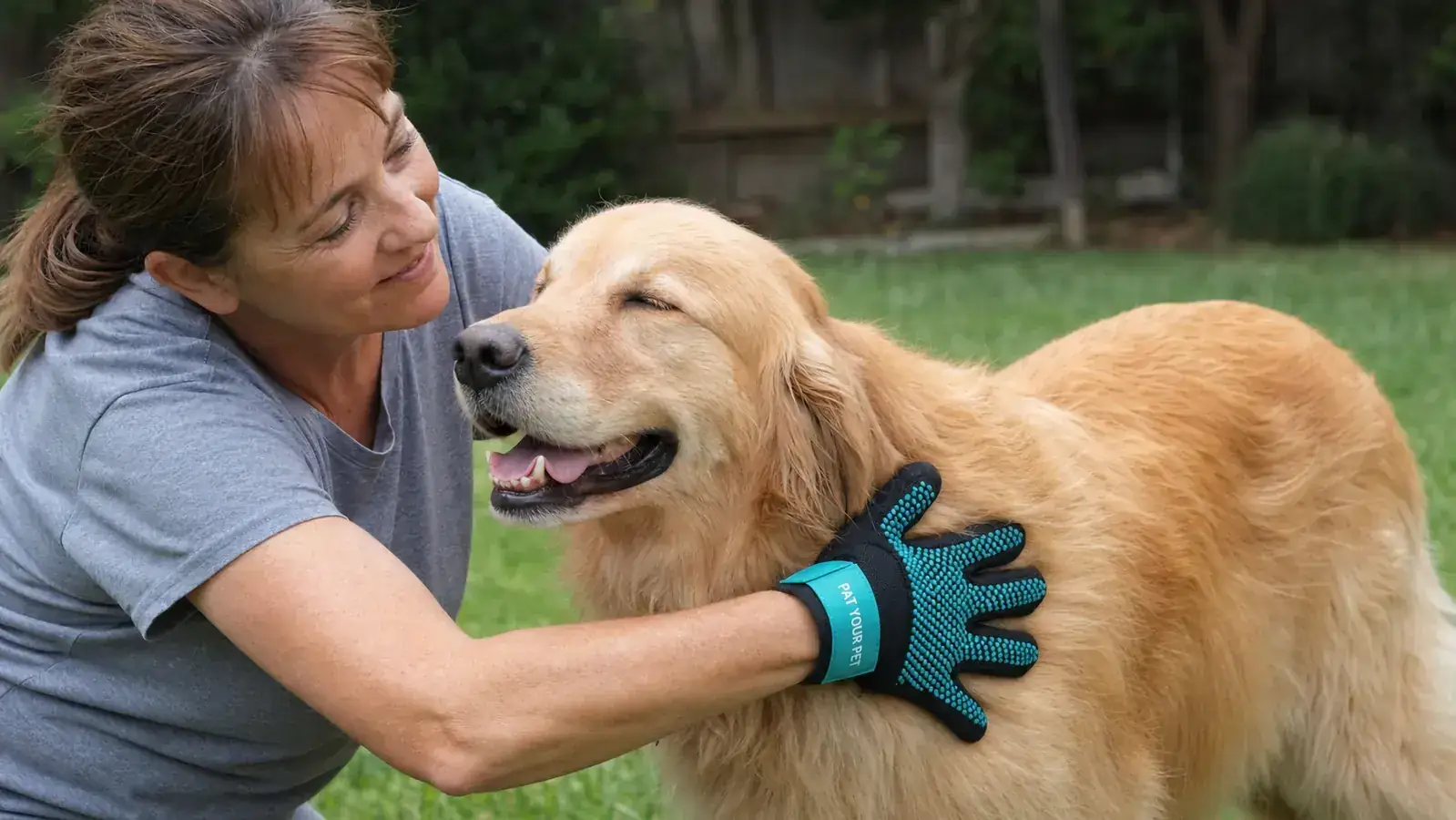
Month one was all about learning the brush. I went too firm with the long-tine side on Nora's belly during the first week and she gave me a look I will not soon forget. Once I got the pressure right, lighter than I expected, she leaned into it. By the end of month one the couch situation was noticeably better. I was not vacuuming every other day; every third or fourth day was enough.
Month two was when I started to appreciate the handle design. It is wide, flat, and fits comfortably in my palm, which matters a lot when you are spending ten minutes on a 55-pound dog who is quietly trying to wander toward the treat jar. The brush does not slip even when the tines are loaded with fur, and cleanup takes about thirty seconds: I just pinch the fur off the tines from base to tip and drop it in the trash. No special tool required, no complicated mechanism to clean.
By month three I had the routine dialed in. Biscuit and Nora now trot over when I pick it up, which tells me more about comfort than any rating I could give. Professor Fluffington still acts like grooming is happening to him personally against his will, but he sits still for a full session without escaping, which is a victory.
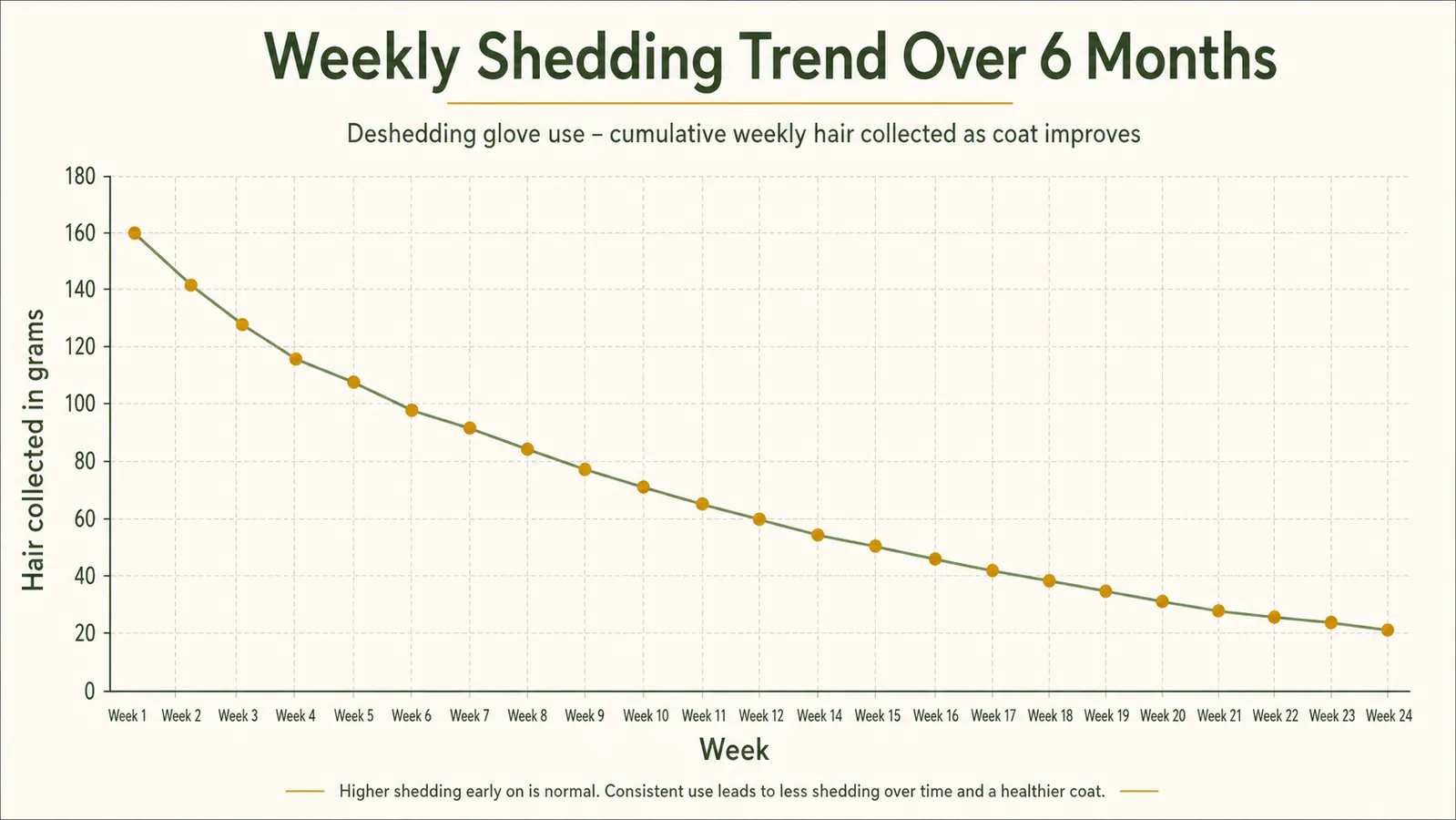
By week six, my couch stopped looking like a fur crime scene. The brush was pulling so much undercoat in each session that the shed between sessions dropped by more than half.
What I Was Using Before, and Why I Switched
Before this brush, I was rotating between a slicker brush, a standard bristle brush, and a rubber grooming glove. The slicker brush worked fine for detangling but did almost nothing for undercoat removal. The bristle brush was good for a final polish but again barely touched the undercoat. The rubber glove was great for Biscuit's sentimental "this is my petting" energy, but it does not produce real deshedding results on a thick double coat.
I had also used a FURminator for about two years before it cracked along the handle seam. The FURminator is genuinely effective on undercoat, but it can strip topcoat if you overuse it, and the replacement cost is real. At three to four times the price of the Pat Your Pet brush, I was curious whether I actually needed to spend that much. The short answer is that for everyday maintenance between full deshedding sessions, I do not think I do. If you want a deeper dive on that comparison, I laid out the full side-by-side in my Pat Your Pet vs FURminator comparison.
How It Works on the Maine Coon vs the Huskies
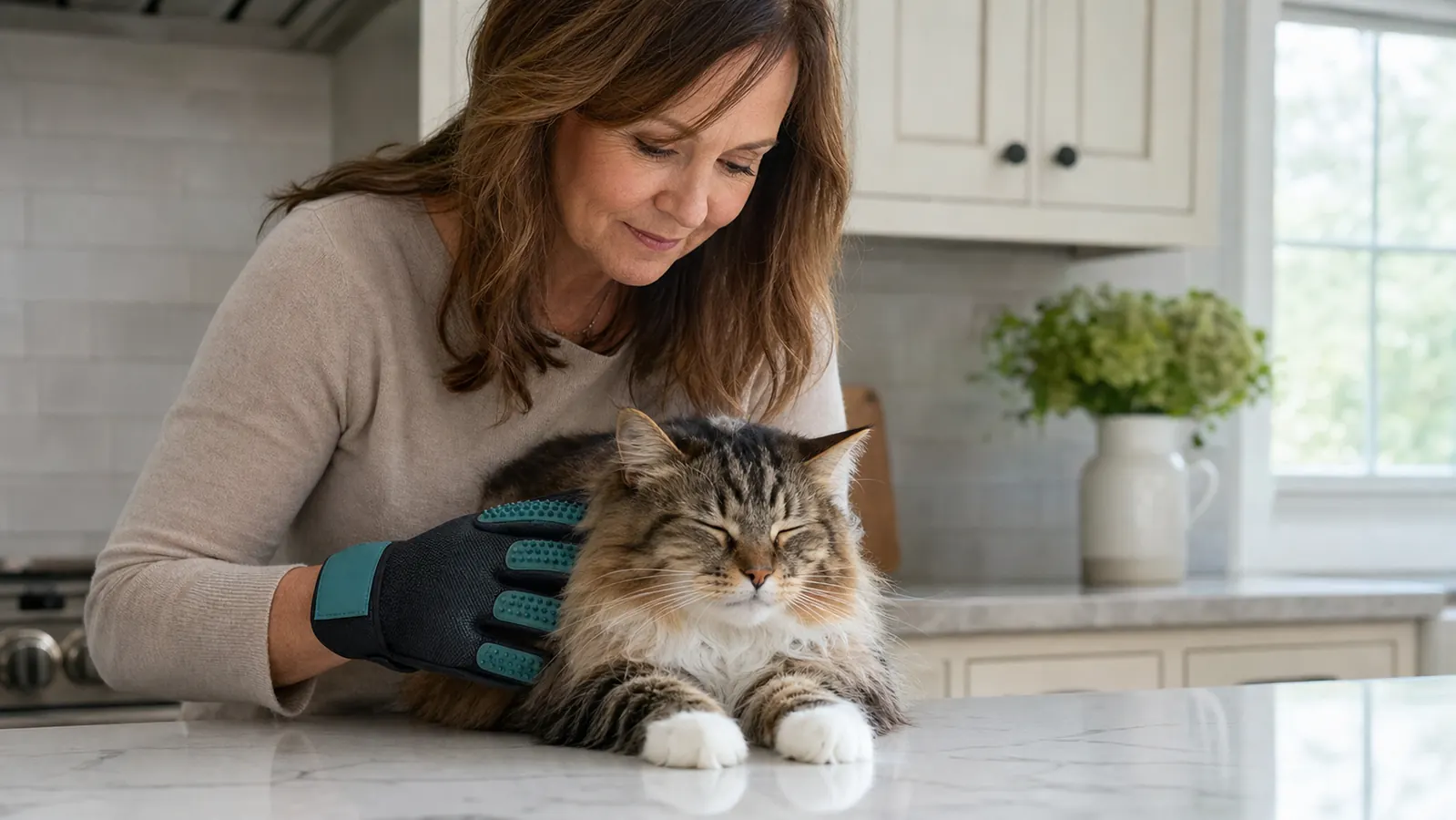
Professor Fluffington is a ten-pound Maine Coon with semi-long fur that, if left ungroomed for more than four or five days, starts forming soft mats along his lower back and flanks. The short-tine side of this brush has become my daily five-minute maintenance tool on him. It catches loose fur before it clumps without being harsh enough to pull on small mats. When I do encounter a mat, I work around the edges with the short tines before switching to a wide-tooth comb to work through the center; trying to rake a mat straight through with any brush is a good way to lose a finger.
The experience is genuinely different from grooming the Huskies, and the fact that this brush handles both reasonably well is probably its biggest practical advantage for a multi-pet household. I do not have to keep a separate dedicated cat brush in the drawer. One tool, two coat types, one fewer thing to hunt for when the cat has decided today is the day he cooperates.
Alternatives I Considered and Why I Kept Coming Back
I tested two other brushes in this price range during the same three months to keep myself honest. One was a basic double-row pin brush I found at the pet store. It was fine for detangling but moved too much topcoat and not enough undercoat, and the pins started bending slightly after about a month of daily use. The second was a wave-tine deshedding comb that pulled undercoat reasonably well but was genuinely uncomfortable to hold for any session longer than five minutes. Neither of them displaced the Pat Your Pet brush from my regular rotation.
The honest reason I kept coming back is that this brush does 85 percent of what a FURminator does for about 25 percent of the price, and it does it gently enough that I can use it every other day without worrying about topcoat damage. For a household with this much fur production, the value equation makes a lot of sense. If you are curious about other tools worth building into your weekly routine, my 10 grooming habits for healthier dogs and cats covers the full picture.
What I Liked
- Pulls significant undercoat from thick double-coated breeds like Huskies without stripping topcoat
- Short-tine side is gentle enough for cats and sensitive belly areas
- Comfortable, non-slip handle that does not fatigue the hand during 10-minute sessions
- Tines clean easily in 30 seconds with no special tool needed
- Works across both dogs and cats, so multi-pet households only need one brush
- Price is a fraction of premium deshedding tools, making it easy to replace if worn
Where It Falls Short
- Long-tine side requires light pressure to avoid skin sensitivity; new users may press too hard
- Not ideal for deep mat removal on long-coated cats, a comb is still needed for that step
- Tine tips showed minor cosmetic wear by month three, though they still performed well
- Handle width is generous, which works well for most adults but may be awkward for smaller hands
Who This Brush Is For
This brush is the right fit for anyone with a heavy-shedding double-coated dog, a long-haired cat, or both. It is especially useful if you groom regularly at home and want a tool that can do the full job in one pass: topcoat smoothing with the short-tine side and undercoat removal with the long-tine side. If you are building a first-time grooming kit for a new dog or cat and you want something versatile that will not break the budget, this is where I would start. It is also a solid choice if you currently own only a slicker brush and have noticed that your shedding situation is not improving no matter how often you brush. The issue is usually undercoat, and slicker brushes do not reach it.
Who Should Skip It
If you have a short-coated dog, like a Beagle, Boxer, or Vizsla, you will probably find the long-tine side overkill and the short-tine side serviceable but not exceptional. A rubber grooming glove or a soft-bristle brush is a better daily tool for those coat types. If your dog has severe matting that needs to be worked through before you can brush normally, start with a dematting comb first; using this brush on a matted coat is going to pull, and the dog will not forgive you easily. And if you are primarily grooming a senior dog with thin or sensitive skin, go lighter than you think you need to and do a patch test on a low-sensitivity area first.
Three months in, this brush is the first one I reach for on grooming days, and my couch finally looks like furniture again.
The Pat Your Pet double-sided deshedding brush is one of those rare sub-$15 tools that actually delivers. If you are fighting an endless shedding battle with a double-coated dog, a long-haired cat, or both, it is worth trying before you spend three times as much on a premium alternative.
Amazon Check Today's Price on Amazon →