
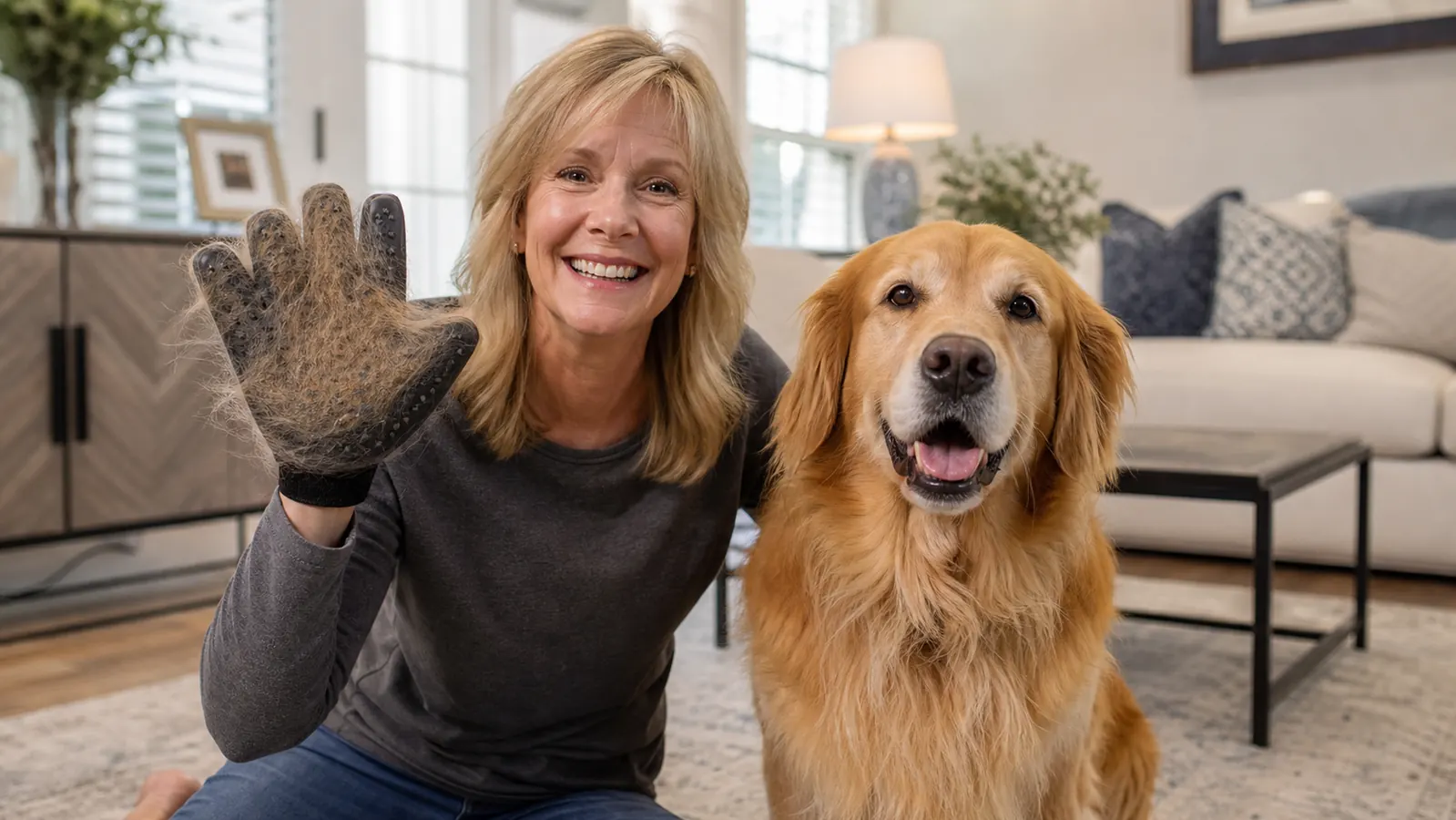
I have had dogs my entire adult life, and for the first ten years of it I was convinced shedding was just something you suffered through. I bought lint rollers in bulk, I vacuumed every other day, and I kept a dedicated fleece blanket on the couch that I just accepted was going to look like a bear rug. Then I fostered a pair of Husky mixes named Biscuit and Gravy, and I had to get serious. That much fur coming off two dogs in a two-bedroom house was not a lifestyle, it was a weather event.
What I learned over the following months, through a lot of trial and error, is that shedding is largely manageable once you treat it as a routine instead of a crisis. You are not going to stop it entirely, and anyone who tells you otherwise is trying to sell you something. But you can stay far enough ahead of it that your dark clothes stop looking like Halloween costumes and your guests stop side-eyeing the couch before they sit down. The steps below are what I actually use, in the order I actually use them, with the Pat Your Pet deshedding brush as the workhorse tool at the center of the whole routine.
Your couch is already covered in fur. Start here.
The Pat Your Pet double-sided deshedding brush is the tool at the core of this routine. One side pulls loose undercoat, the other side finishes and smooths. Over 42,000 pet parents use it. At today's price, it costs less than a single trip to the groomer.
Amazon Check Today's Price on Amazon →Step 1: Know What Kind of Shedder You Are Dealing With
Not all shedding is the same, and your approach should match your dog's coat type. Single-coated breeds, like Boxers, Greyhounds, or Vizslas, shed a moderate amount year-round but have no thick undercoat to worry about. Double-coated breeds, like Huskies, German Shepherds, Golden Retrievers, Labrador Retrievers, and most working dogs, have a dense insulating layer beneath the visible topcoat. That undercoat blows out hard twice a year, usually in spring and fall, but it sheds continuously the rest of the time too. If your dog is double-coated, you need a tool designed to reach through the topcoat and pull that loose undercoat out before it falls on your furniture on its own schedule.
The Pat Your Pet brush handles both coat types. The stiffer deshedding side is designed specifically for double-coated dogs, pulling dead undercoat without pulling or cutting the guard hairs on top. The softer bristle side works well for single-coated dogs and for finishing passes on any coat type. Understanding which side to use, and how firmly to press, makes a real difference in how much fur you collect per session. For double-coated heavy shedders, you will almost always start with the deshedding side and finish with the bristle side to redistribute the coat oils and smooth things down.
Take a few minutes to look up your specific breed's coat type if you are not certain. It will also tell you when the seasonal blow-out periods typically fall, which helps you schedule the more intensive brushing sessions rather than getting blindsided when half the dog suddenly ends up on your kitchen floor in April.
Step 2: Set a Brushing Schedule You Can Actually Keep
The single biggest mistake people make is brushing too infrequently and then trying to make up for it with a marathon session. Mats form, dogs get uncomfortable, and the whole experience becomes a battle no one wants to repeat. Consistency is what makes this work. For heavy shedders, I aim for three to four brushing sessions per week, around ten to fifteen minutes each. For moderate shedders, twice a week is usually plenty. During a seasonal blow-out, I go daily until it settles down.
Biscuit and Gravy, my Husky fosters, taught me to do it right after the evening walk when they were naturally calmer and a little tired. Timing matters. A dog who just burned some energy is a much more cooperative grooming subject than one who is full of beans and wants to play. I do it in the same spot each time, on a rubber-backed mat in the mudroom, so they know the routine and settle in quickly. Routine tells your dog what is expected. After a few weeks, most dogs will actually start coming to you when they see the brush come out.
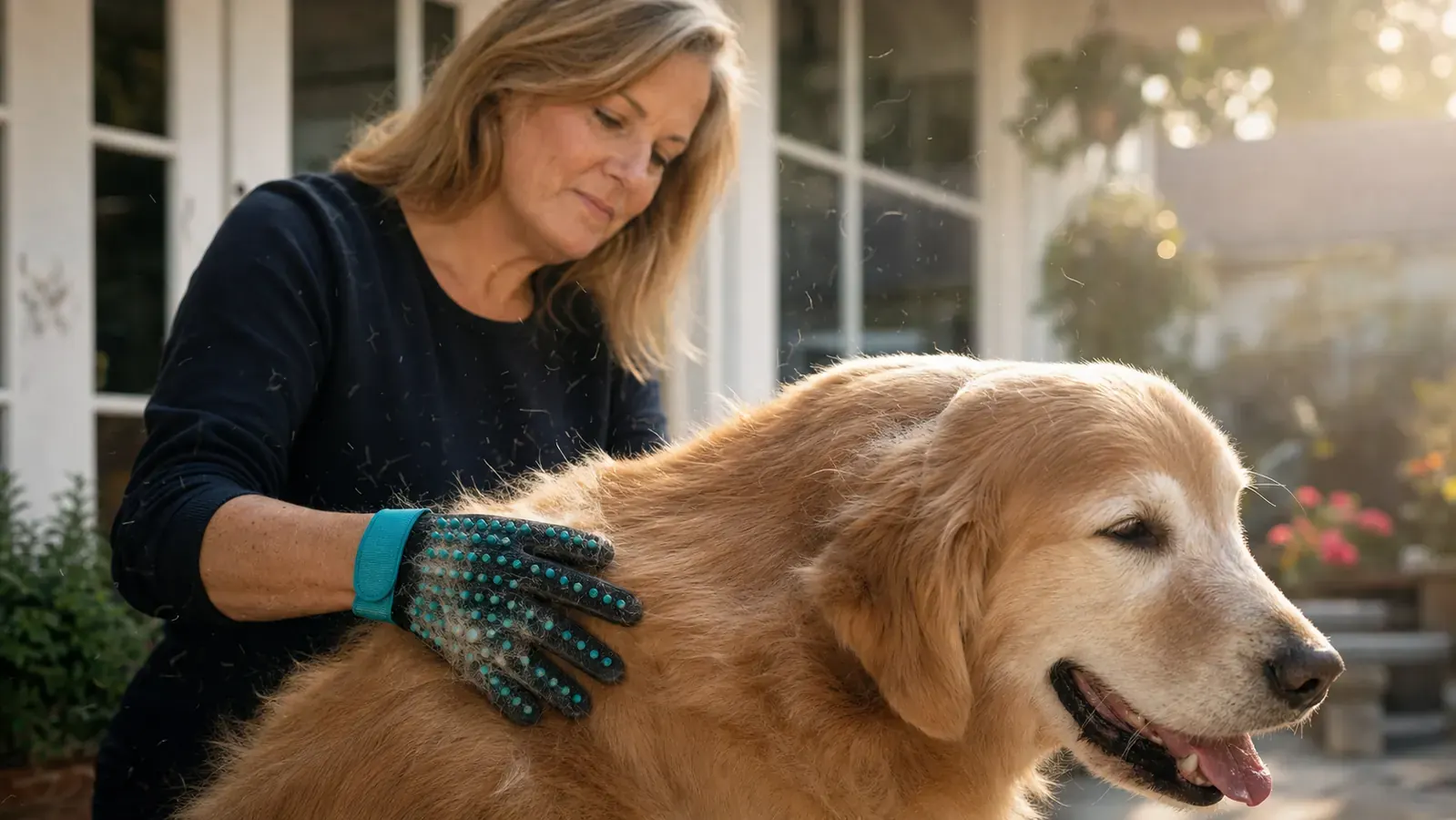
One practical tip on technique: always brush in the direction of fur growth, not against it. Work in sections from neck to tail, lifting the coat slightly with your free hand as you go so you reach the undercoat layers. On the chest and around the collar, go gently since skin there is thinner and more sensitive. Collect the fur as you go, rather than letting it drift around your brushing area, so you get a satisfying visual of what you have removed and can track whether your sessions are getting more efficient over time.
Step 3: Add a Monthly Deshedding Bath
Water and a good rinse do something a dry brush session cannot: they loosen the dead undercoat that is still attached at the follicle level. Once that coat is loosened, it comes out during the post-bath brushing in a way that feels almost satisfying. I add a deshedding bath once a month for my high-shedding dogs, and I move that up to every three weeks during peak blow-out season.
The process is simple. Wet the coat thoroughly, massage in a shampoo designed for shedding dogs (I use one with oatmeal and omega fatty acids), rinse completely until the water runs clear, and then towel-dry without rubbing too vigorously. The key step most people skip is a thorough brush-through while the coat is still slightly damp. Not soaking wet, but not fully dry either. That slightly damp window is when the loose undercoat releases the most easily. Run the deshedding side of the Pat Your Pet brush through in sections, and you will pull out an amount of fur that might genuinely alarm you. That fur was going to end up on your sofa. Now it is in the trash instead.
Do not over-bathe in an attempt to speed up shedding. More than once every three weeks for heavy shedders, or once a month for moderate ones, strips the natural oils from the coat and actually makes shedding worse over time. The coat dries out, the skin gets flaky, and you end up in a cycle that is harder to fix than the original problem. Once a month is plenty for most dogs.
Step 4: Support the Coat from the Inside with Nutrition
I learned this one from a foster coordinator who had been placing dogs for thirty years. She told me that the first thing she looked at when a dog came in with bad shedding was the food bag, not the grooming supplies. A coat is a reflection of what the dog is eating, and a low-quality diet shows up fast in the form of excessive shedding, dullness, and brittle fur.
The two biggest nutritional factors in coat health are protein and omega fatty acids. Protein is the building block of fur itself; a diet too low in quality protein leads to weak, easily shed fur. Omega-3 and omega-6 fatty acids, found in fish oil, flaxseed, and fish-based dog foods, support skin hydration and reduce the inflammation that drives some excessive shedding. I add a fish oil capsule to my dogs' food every morning. It is cheap, it takes ten seconds, and over the years I have seen consistently better coats on dogs who get it versus those who do not.
If your dog's shedding increased noticeably around the time you switched foods, that is worth paying attention to. Some dogs react to grain-based formulas with increased coat issues; others do not. It is not a hard rule, but if you have a heavy shedder and a suspicion the food might be part of the picture, a conversation with your vet about diet options is a reasonable next step. Always check with your vet before making significant diet changes, especially for dogs with existing health conditions.
The first thing I look at when a rescue comes in shedding badly is the food bag, not the grooming tools. A poor coat almost always starts from the inside.
Step 5: Manage the Environment Between Sessions
Even with a solid brushing routine and good nutrition, some fur is going to make it to your furniture, and that is fine. The goal is to stay ahead of the accumulation rather than fight it after it has built up. A few simple environmental habits make the gap between grooming sessions much easier to manage.
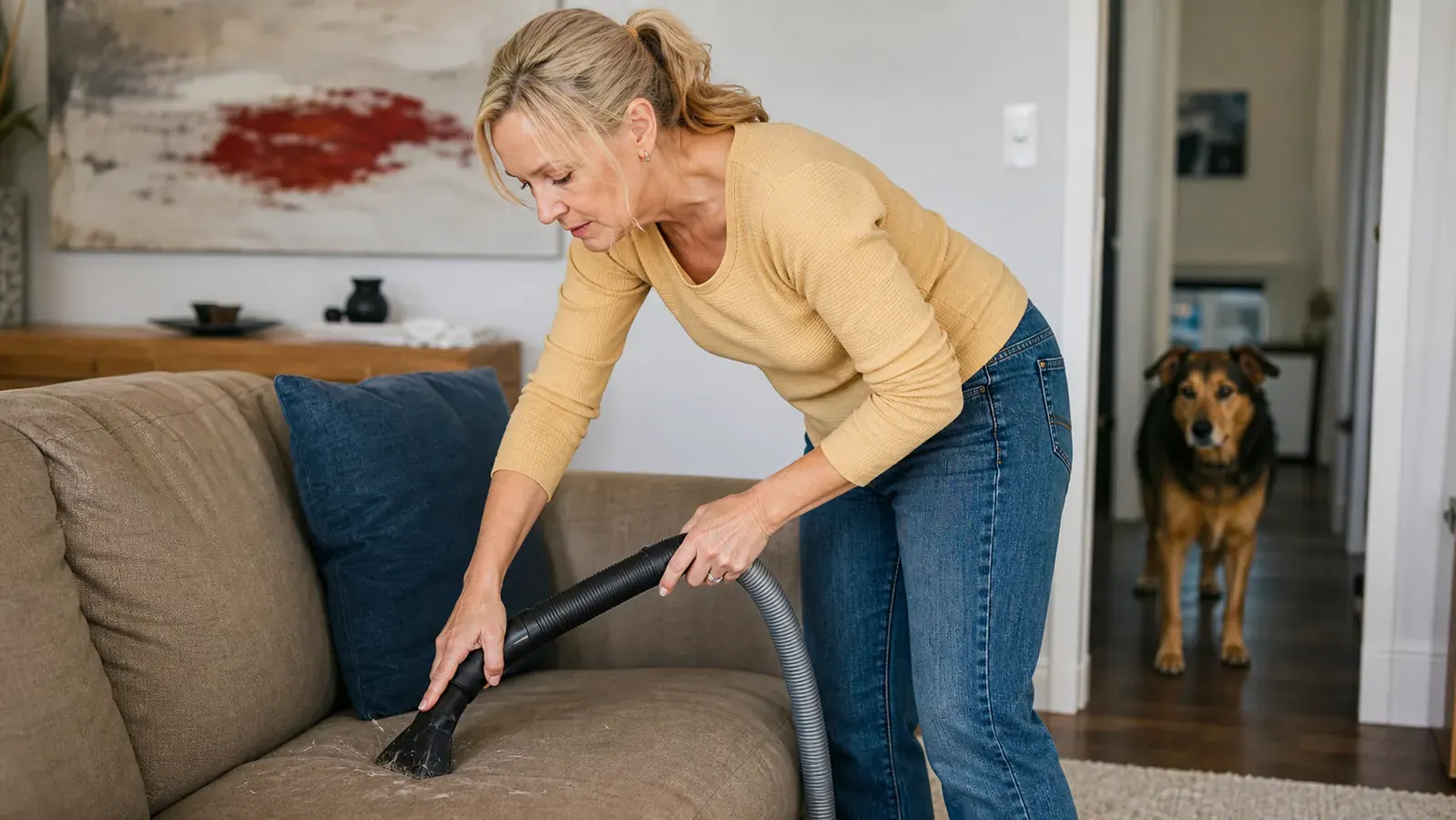
First, designate specific dog areas in your home and use washable covers on those spots. I keep a fitted cotton slipcover on my couch where my dogs sleep, and I toss it in the wash weekly. It takes maybe two minutes to swap out, and it means the couch itself stays clean. Second, vacuum on a schedule rather than as a reaction. Three times a week for rooms where the dogs spend the most time keeps fur from compressing into the carpet fibers, which makes it exponentially harder to remove. Third, a rubber squeegee or rubber glove dragged across fabric surfaces pulls fur off upholstery in a way that no standard vacuum attachment quite matches. It sounds low-tech because it is, but it works.
I also keep the Pat Your Pet brush near the door for what I call the exit brush, a quick thirty-second pass before any dog gets on the furniture or right before visitors arrive. It is not a substitute for a real grooming session, but it removes whatever loose fur has accumulated since the last full brush-out and takes almost no time. That one small habit has probably reduced my furniture fur by thirty percent on its own.
What Else Helps
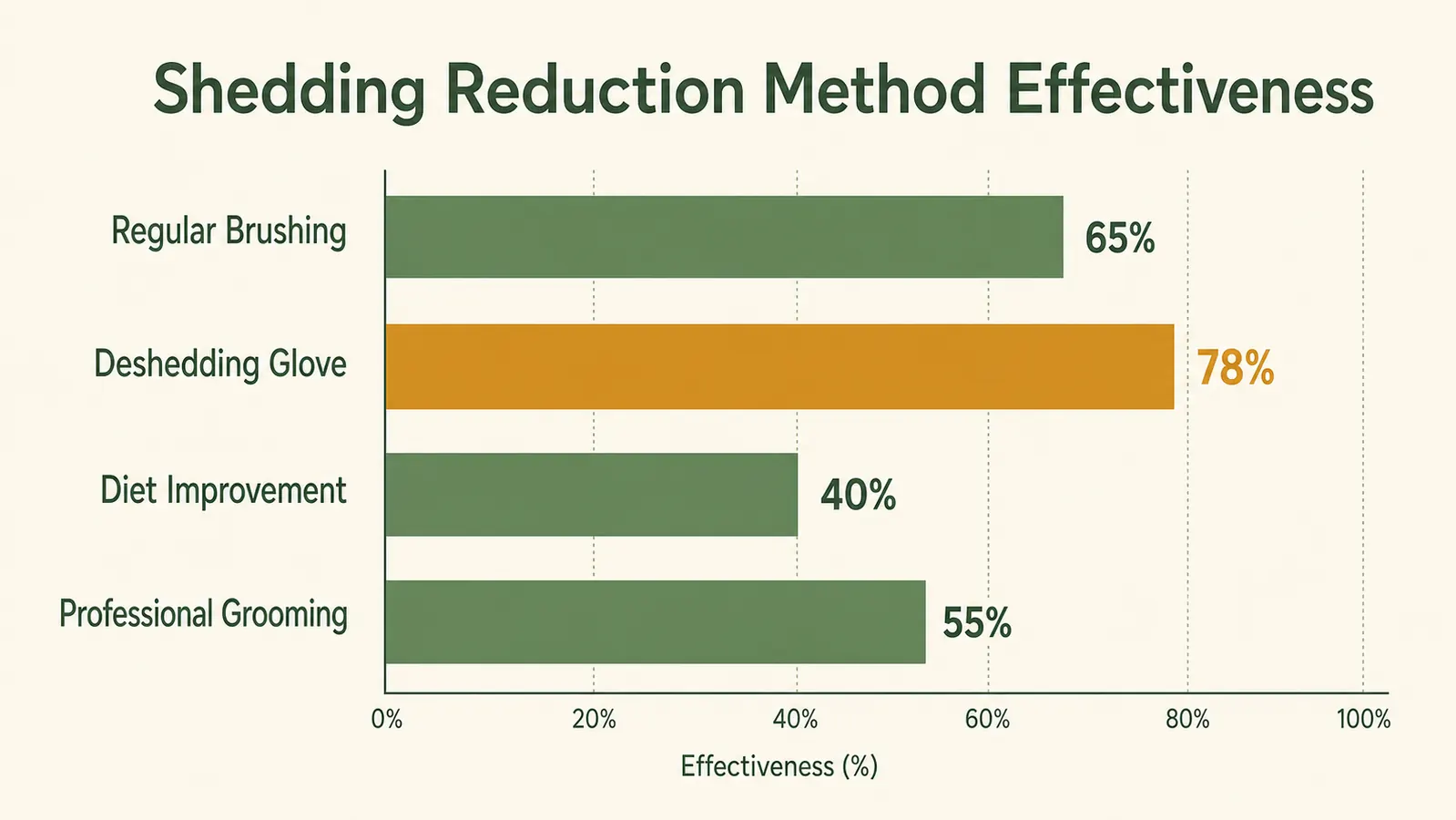
A few extra things I have found genuinely useful over the years, none of which require much investment. A high-velocity dryer (the kind groomers use) is transformative during blow-out season because it literally blows the loose undercoat out of the coat in a controlled session before it has a chance to migrate around your house. They cost more upfront but pay for themselves quickly if you have a double-coated high-shedder. On the less expensive side, a simple de-shedding glove works surprisingly well for dogs who are sensitive about having a brush around their face and paws, since it feels like petting. I use one for my older cats for the same reason.
Stress is also a real driver of increased shedding that most people do not think about. Dogs going through a change in routine, a new home, or an anxiety period shed noticeably more. If your dog's shedding spiked around a life change rather than a seasonal shift, addressing the underlying anxiety is likely to help as much as any grooming intervention. Exercise, consistent routine, and for severe cases a conversation with your vet about anxiety support are all worth considering.
For a deeper look at the grooming habits that support overall coat and skin health year-round, the article on 10 grooming habits that keep dogs and cats healthy covers the full picture. And if you want to see exactly how the Pat Your Pet brush performs across different coat types with specific before-and-after observations, the three-month Pat Your Pet brush review goes into that detail.
The brush that makes all five steps easier.
The Pat Your Pet double-sided deshedding brush is the one tool I reach for at every stage of this routine, from the post-bath brush-out to the quick exit brush before guests arrive. Rated 4.6 stars across more than 42,000 reviews. Check the current price and see if it is right for your dog's coat type.
Amazon Check Today's Price on Amazon →