
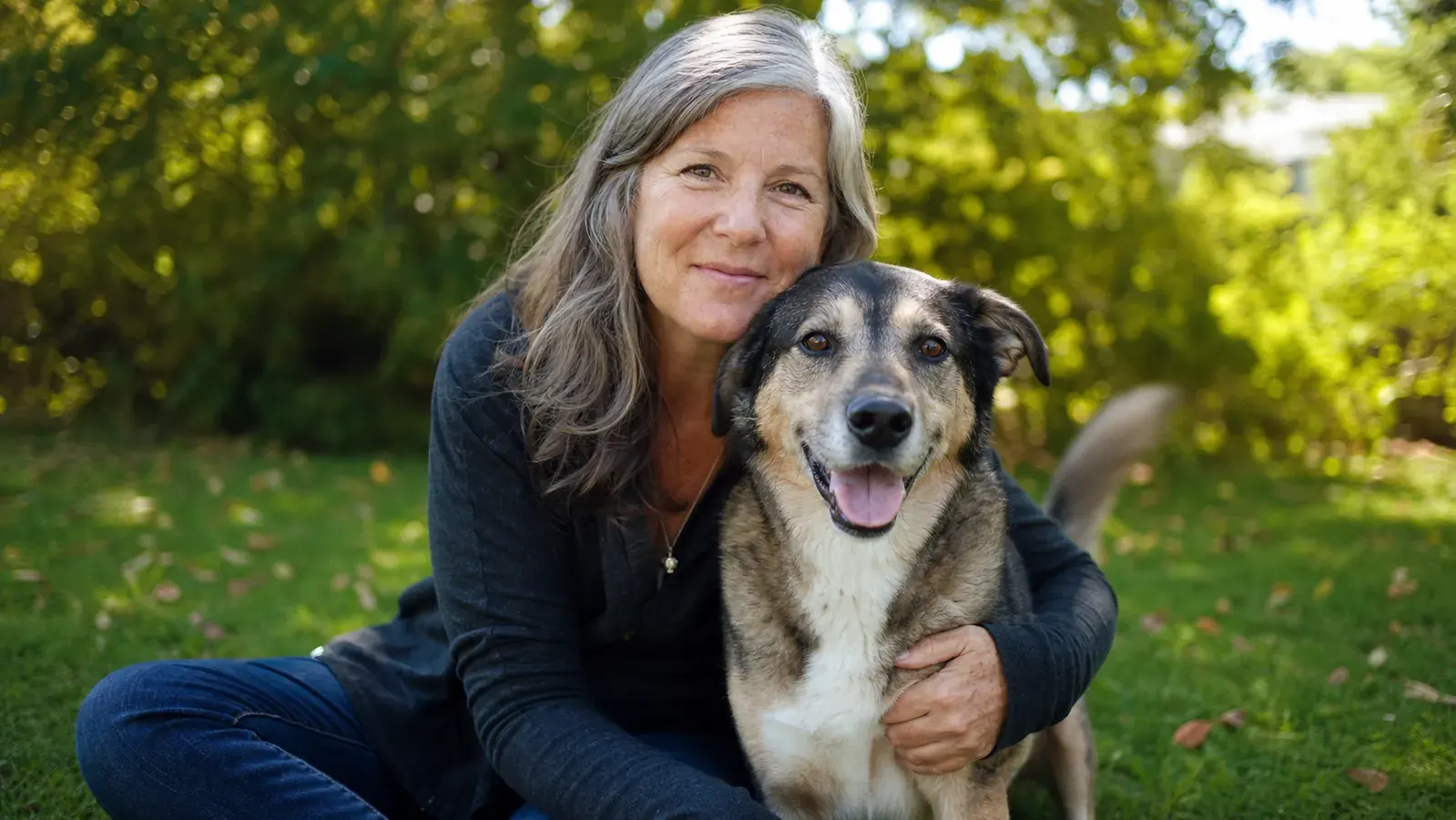
Harriet came to me the way most of my fosters do: a phone call from the rescue coordinator, a vague description of the situation, and a dog in the back of a stranger's car showing up at my door two days later. She was nine years old, a retired racing Greyhound, and she had been bounced through two other homes before mine. I have been fostering dogs and cats for over twenty years, so I knew before she even got out of the car that a senior dog coming out of a racing background was almost certainly going to need a joint supplement. What I did not know yet was how much.
The rescue coordinator warned me she was "a little stiff." That turned out to be a generous description. The first morning, I watched Harriet stand at the bottom of the three steps that lead from my kitchen to the back door. She stared at those steps for a solid thirty seconds before attempting them. When she finally went for it, her back legs wobbled and she had to pause halfway up, redistribute her weight, and push through like she was summiting something. She was just going outside to pee. I stood there feeling awful for her and completely unsure what to do next.
I know that joint stiffness in an older dog is not something you can just walk off or wait out. It tends to get worse before it gets better, especially in a dog who spent her entire working life running hard on a track. Harriet's joints had been through a lot, and her new reality was three steps to the backyard that might as well have been a mountain.
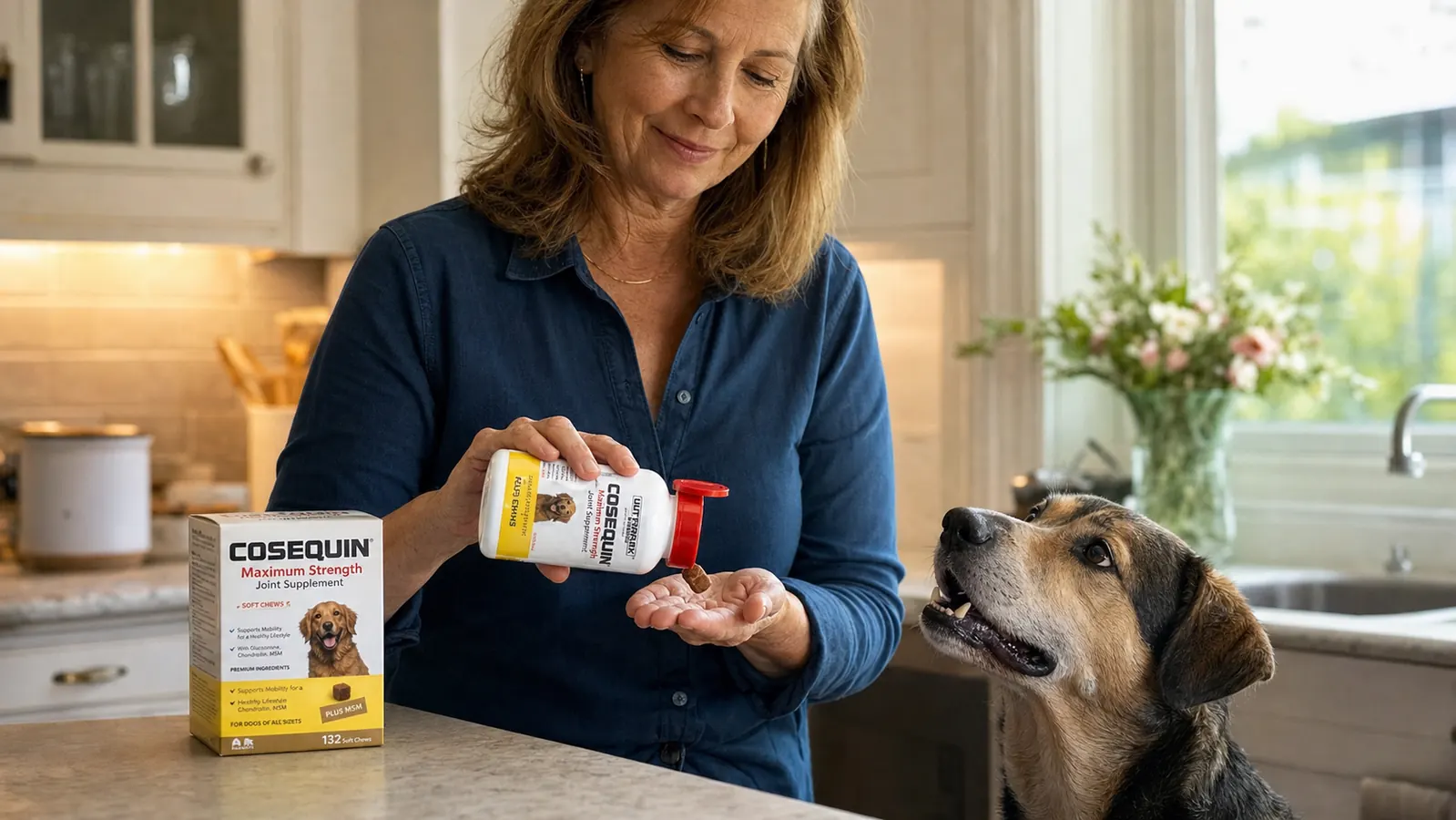
I talked to my vet at Harriet's intake appointment. She was not surprised. She said Harriet showed signs of joint degeneration consistent with her age and history, and she recommended starting a glucosamine and chondroitin supplement right away. She said the one she saw the most consistent results with in her senior dog patients was the Nutramax formula with MSM, which I knew as Cosequin. I had actually used it years earlier with a Lab named Gus, but I had been inconsistent about it and never really paid close attention to whether it was helping him. This time I was going to be deliberate.
By week three, Harriet was doing those three kitchen steps without stopping. I actually stood there and teared up a little, which my husband thought was ridiculous. I thought it was completely reasonable.
I ordered Cosequin and started Harriet on the loading dose the same week. The chews are small and she took to them immediately, which honestly I was not expecting because Greyhounds can be picky. I just put it on top of her kibble and she ate the whole thing without question. For the first two weeks, I did not notice much. I kept reminding myself that these supplements are not ibuprofen. They work by supporting the joint tissue over time, not by numbing anything immediately. I wrote myself a little note and stuck it to the fridge: "Give it six weeks."
Around week three, I noticed Harriet was doing the kitchen steps without the long pause at the bottom. She still took them carefully, but the hesitation was shorter. By week four she was doing them in one smooth motion. I would not call it bounding, but it was clearly different from what I had seen in week one. She was also getting up from her dog bed more easily in the mornings, which had been almost as painful to watch as the stairs.
Harriet's vet recommended Cosequin. See today's price on Amazon.
The same Nutramax Cosequin formula with glucosamine, chondroitin, and MSM that Harriet has been on for four months straight. Over 78,000 reviews. Ships fast.
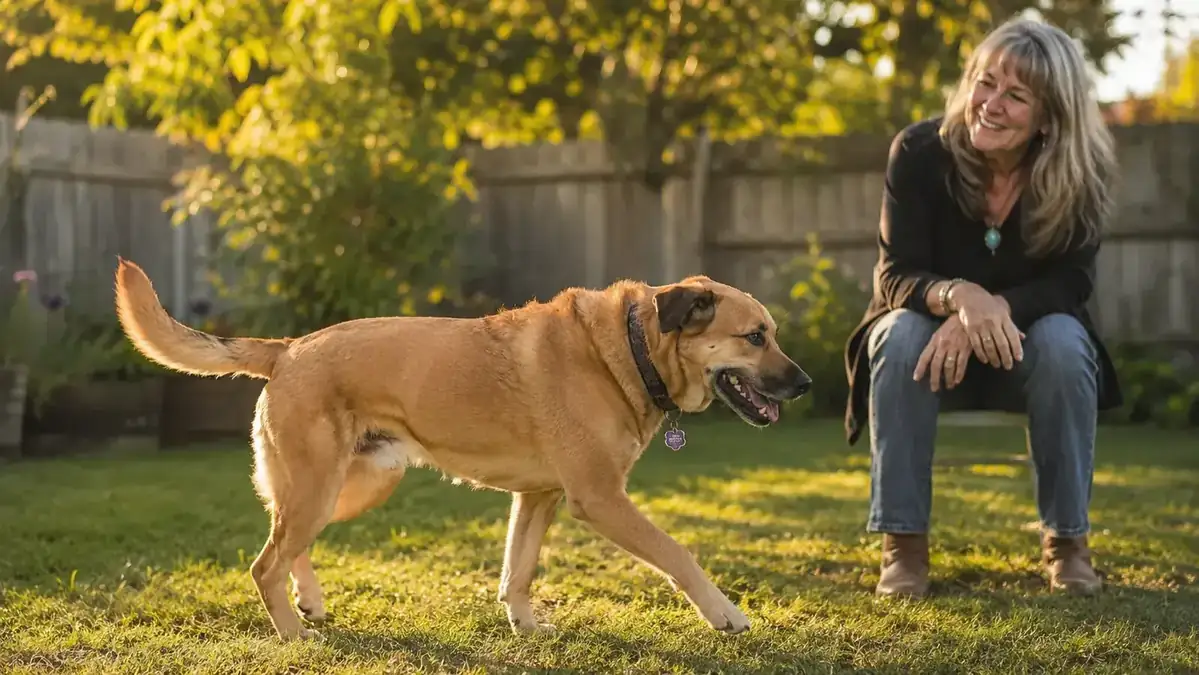
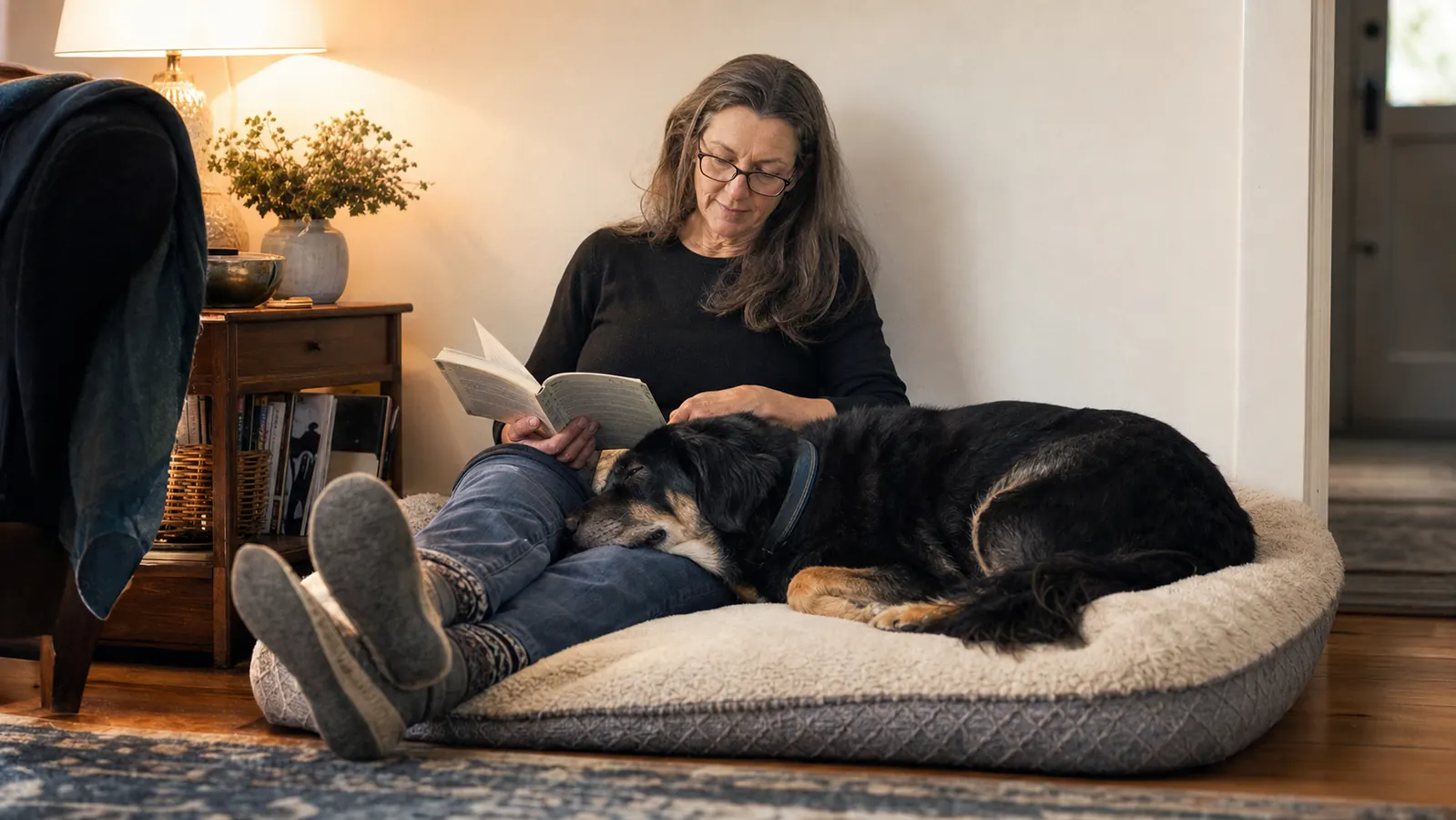
Amazon Check Today's Price on Amazon →Harriet has been with me for four months now. She is not a foster anymore. I failed spectacularly at that part, which any long-term rescuer will recognize immediately. She is eighty-two feet of Greyhound spread across my couch most evenings, and she walks those three kitchen steps without a second thought. She has even started trotting out to the back fence to investigate squirrels, which she absolutely never did in her first month with me. My vet is pleased. I am pleased. Harriet is mostly indifferent but occasionally wags her tail at me, which for a Greyhound is basically a standing ovation.
I want to be careful here because I am not a vet and I would not want anyone to skip an actual vet visit based on something I wrote on the internet. Harriet's improvement could reflect a number of things, including the supplement, a better diet than she had before, more consistent gentle exercise, and a calmer home environment. Probably all of those things together. But the supplement is the only variable I added deliberately and on a schedule, and the timing of her improvement tracks closely with the loading phase the label describes. Make of that what you will.
What I'd Tell You If We Were Sitting at My Kitchen Table
If your senior dog is stiff in the mornings, struggling with steps, or just slower to get up than they used to be, I would tell you this: talk to your vet first, because there are other things that can cause those symptoms and a good vet will rule them out. But if your vet gives you the same thumbs-up mine did, do not overthink the supplement aisle. Get the one with the track record, follow the loading dose on the package, and give it at least six weeks before you decide it is not working. I have seen too many people try something for ten days and quit. These things need time to do what they do.
Harriet is nine years old and living her best retired life in my living room. That is not nothing. For a dog who was struggling to get up three kitchen stairs four months ago, it feels like quite a lot. If you have a dog in a similar spot, it is at least worth a conversation with your vet and a look at what has worked for over seventy-eight thousand other pet owners on Amazon.
Ready to try it? See if Cosequin is still in stock.
Nutramax Cosequin DS Plus MSM for dogs. Vet-recommended formula with glucosamine and chondroitin. Click through to see current pricing and availability on Amazon.
Amazon Check Today's Price on Amazon →