
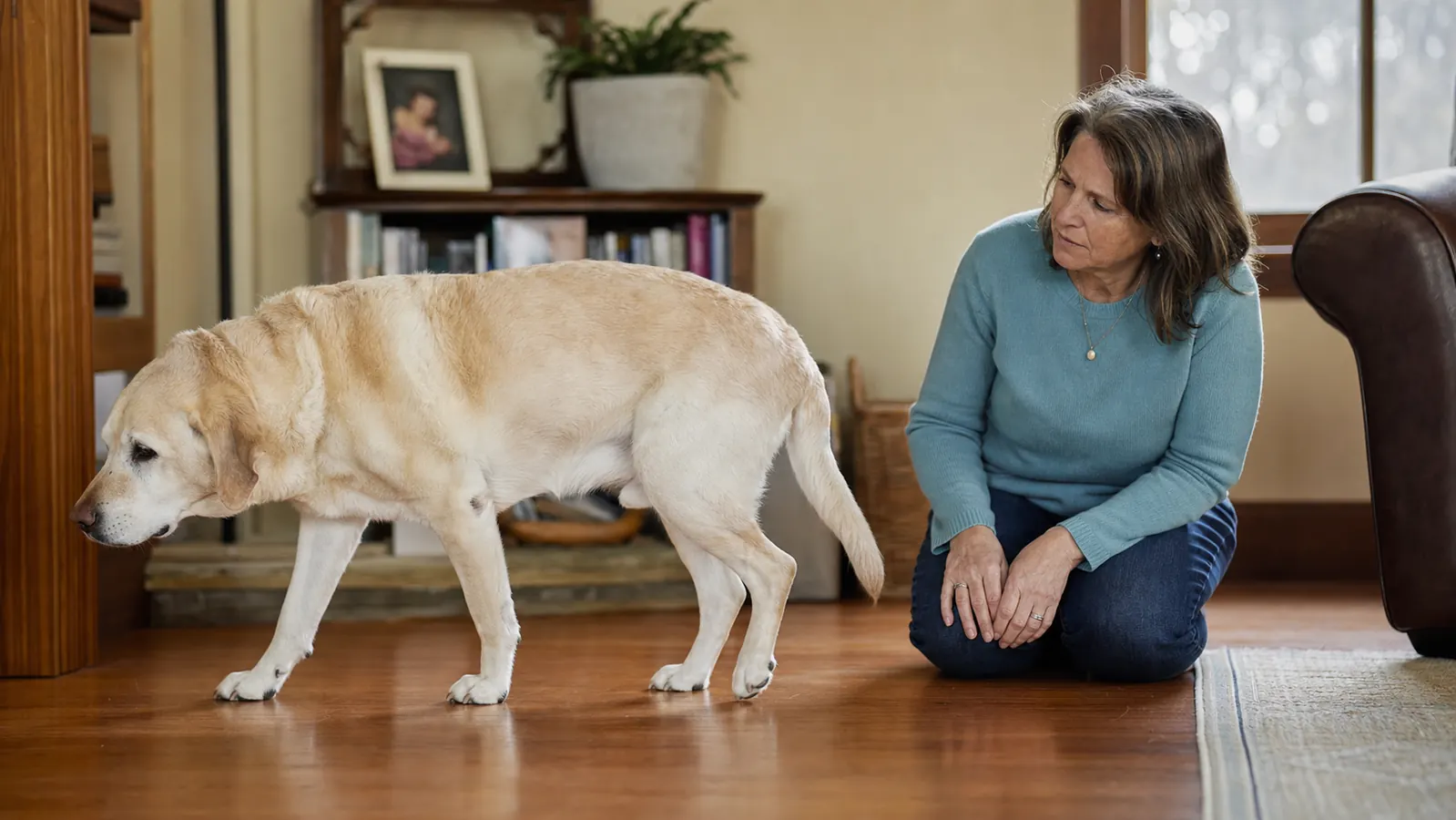
I have been living with dogs for over 20 years, and I will be the first to admit that joint trouble snuck up on more than one of them before I caught it. My shepherd mix Rosie was six when I noticed she had stopped jumping onto the couch. I thought she was just being moody. Three months later, my vet pointed out early hip dysplasia. Six, you guys. Not even a senior dog yet.
The frustrating thing about joint pain in dogs is that they hide it well. They are not going to limp dramatically and look at you with sad eyes, at least not at first. The early signs are quieter than that, and easy to chalk up to a lazy day or a personality quirk. This list is the one I wish I'd had back then. If your dog is showing even two or three of these, it is worth a conversation with your vet and a look at what you are feeding their joints every day.
If your dog is already slowing down, the time to start is now, not after another hard winter.
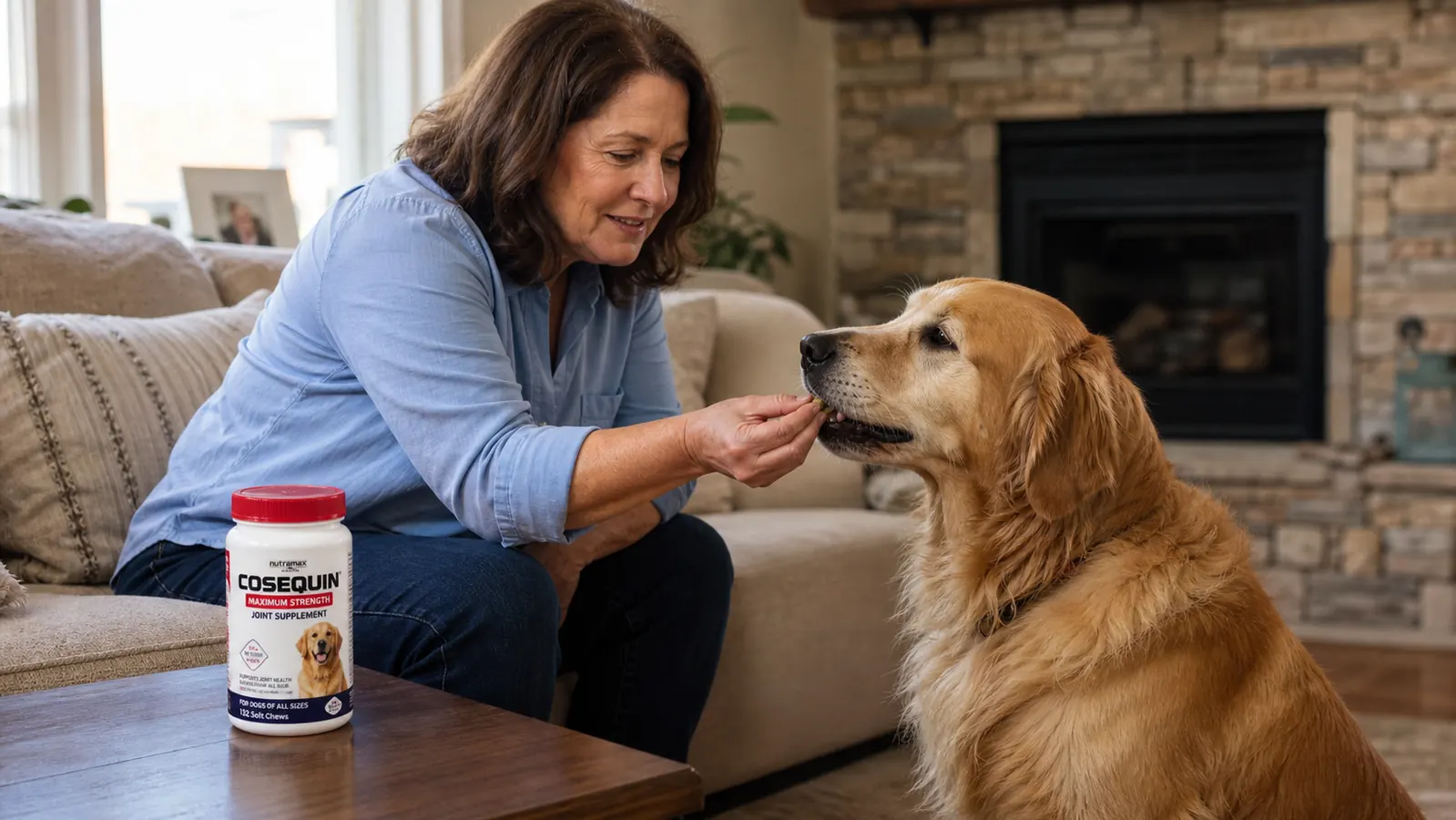
Nutramax Cosequin is the glucosamine supplement most vets mention first. Over 78,000 Amazon reviews and 4.7 stars. Works as a sprinkle-on powder for dogs who won't take chews.
Amazon Check Today's Price on Amazon →Morning Stiffness That Eases Once They Get Moving
This was the first thing I noticed with Rosie. She would wake up, get to her feet slowly, take a few stiff steps, and then warm up and look normal within 10 minutes. I assumed she was cold. What I did not know is that morning stiffness that resolves with movement is a textbook early symptom of joint cartilage breakdown. Glucosamine and chondroitin, the core ingredients in Cosequin, are specifically studied for supporting cartilage cushioning over time. If your dog consistently moves stiffly for the first few minutes after resting, do not wait to see how it develops.
Reluctance to Jump Up or Climb Stairs
Dogs who used to hop on the bed without a second thought and now stand at the edge and hesitate are telling you something. Same with stairs. My foster Lab Bear started sitting at the bottom of the back steps and waiting for me to come down to him. At first I found it endearing. It was not endearing, it was pain. Jumping and climbing require the kind of explosive hip and knee extension that gets uncomfortable fast when joints are inflamed. This is one of the clearest behavioral flags there is.
Shorter Walks or Falling Behind on Familiar Routes
Does your dog usually drag you down the block, then suddenly start lagging on the same walk you have done a hundred times? Distance tolerance dropping without any other obvious cause, no illness, no injury, is often an early joint signal. The muscles that stabilize achy joints fatigue faster, and the dog simply cannot sustain activity the way they could before. I have noticed this in fosters long before any vet-visible inflammation shows up on X-rays.
Licking or Chewing at a Specific Joint
Dogs self-soothe sore spots the same way we rub a stubbed toe. If your dog is repeatedly licking their elbow, knee, or hip area with no visible wound there, follow that licking. It is often pointing at localized joint discomfort underneath the skin. I have caught early elbow dysplasia in a foster this way, and my vet confirmed it. This one tends to get missed because owners assume it is a skin issue or just a nervous habit.

Sitting or Lying Down Awkwardly
Healthy dogs tend to sit squarely, weight balanced. Dogs with hip or knee discomfort start sitting to the side, shifting their weight off the uncomfortable joint. Same with lying down: they circle repeatedly, seem unable to get comfortable, or lie in positions that look oddly twisted. Once I knew what to look for, I saw it all the time in senior fosters who had come in labeled as "restless" or "anxious."
Visible Swelling Around a Joint
By the time swelling is visible, things have been uncomfortable for a while. Run your hands along your dog's elbows, knees, and hips regularly and compare both sides. Any puffiness, heat, or asymmetry is worth a vet visit. This is not a situation where you wait to see if it resolves on its own. That said, a good joint supplement started now can help support the tissue around the joint and reduce ongoing inflammation, which is exactly the role MSM plays in Cosequin's formula.
Personality or Mood Changes, Especially Irritability
A dog in chronic pain often becomes less tolerant of handling, especially around the sore area. A dog who was never snappy might growl when you reach for their back end. A social dog might start withdrawing to be alone more. I fostered a 9-year-old Beagle named Chip who had been returned twice for "aggression." Turned out he had significant hip arthritis. Within six weeks of consistent joint supplement use plus a vet-prescribed anti-inflammatory, he was a completely different dog. Pain changes behavior. That is just true.

Noticeable Muscle Loss Along the Back or Hips
When a dog favors a joint, they reduce how much they use the muscles around it. Over time, those muscles atrophy. You will see it as a visible thinning or asymmetry along the hindquarters or spine. Run your palm down your dog's back and over their hips periodically. If one side feels significantly less developed than the other, they have likely been compensating for discomfort for quite a while. My full Cosequin review covers what a consistent supplementation schedule looked like for one of my Labs over six months.
Audible Clicking or Grinding When They Move
This one gets people's attention fast, and rightly so. Crepitus, the medical term for that clicking or crunching sound in joints, indicates that the cartilage cushioning between bones is thinning. It is not always painful at first, but it is a clear structural signal. If you can hear your dog's joints when they walk or when you flex the joint gently, mention it at your next vet appointment. It is one of the more definitive early indicators that joint support needs to be part of their daily routine.
Being Over Seven Years Old and Not on Anything
This is the one most people skip over because the dog seems totally fine. Here is my honest take after 20 years: joint cartilage does not regenerate well once it breaks down. The goal of a glucosamine supplement is maintenance and slowing, not repair. By age seven, most medium and large breed dogs have already experienced measurable cartilage wear. Starting Cosequin at seven or eight, before symptoms, keeps you ahead of the curve. Starting at eleven after years of stiffness means you are playing catch-up. My guide to easing senior dog joint stiffness goes deeper on the full daily routine I use.
What I'd Skip
There are a lot of joint chews on the market now that lean hard into flavor and marketing and light on actual active ingredient dosage. I have tried a handful of them over the years, usually because they were cheaper or because the packaging looked appealing. The pattern I kept running into: low glucosamine concentration, proprietary blends that buried the dosage, and a lot of filler ingredients dressed up as "super foods." Cosequin has been around since 1992, is the number one vet-recommended retail joint supplement per independent surveys, and publishes its exact ingredient concentrations. That transparency matters to me. When I am giving something to a dog every single day for years, I want to know what is actually in it.
Starting a joint supplement at seven, before symptoms show up, keeps you ahead of the curve. Starting at eleven means you are playing catch-up.
Your dog cannot tell you their joints hurt. These signs are the next best thing.
Cosequin Maximum Strength Plus MSM is the version I use for my larger fosters. Comes in a powder you sprinkle over food, which is great for dogs who refuse chews. 4.7 stars across nearly 79,000 reviews.
Amazon Check Today's Price on Amazon →