

I have a complicated relationship with Cosequin. I have given it to somewhere north of thirty senior and special-needs dogs over the past ten years of fostering, and my feelings about it are real but not simple. I have watched it work beautifully on a Beagle mix named Mabel, a 10-year-old, 28-pound firecracker with arthritis in both front elbows who came to me from a county shelter barely able to push herself up off the floor. I have also watched it do essentially nothing for a Saint Bernard named Hector who was too far gone for anything short of prescription pain management. So when people ask me point-blank whether Cosequin works, my honest answer is: yes, with conditions. And nobody tells you the conditions.
This review is the one I wish existed before I started. It covers what the Nutramax Cosequin label actually tells you, what it quietly leaves out, the four things that will make or break your results, and the real reason most people quit before the supplement has a chance to do anything. The product is Nutramax Cosequin DS Plus MSM, ASIN B003ULL1NQ, with a 4.7-star rating across more than 78,000 Amazon reviews. Let us get into it.
The Quick Verdict
Cosequin is the real deal for dogs with early to moderate joint stiffness, but it demands patience, the right dog, and an honest vet conversation first. Go in knowing that and it delivers.
Amazon Check Today's Price →If your dog is slowing down and your vet gives the green light, this is where I start.
Nutramax Cosequin DS Plus MSM has 78,000+ reviews, a 4.7-star average, and is one of the most frequently recommended joint supplements by veterinarians. Available in multiple sizes. Check today's price and pick the size that makes sense for your dog's weight.
Amazon Check Today's Price on Amazon →The Thing Nobody Tells You About the First Month
Here is the number one reason people leave one-star reviews for a supplement that actually works: they tried it for two or three weeks, saw no change, and concluded it was useless. I understand the frustration. You watch your dog struggle off the couch each morning and you want results now. But glucosamine and chondroitin are not anti-inflammatories. They do not work like ibuprofen. They work by giving your dog's body the raw material to maintain and slow the breakdown of cartilage, which is a slower process than reducing acute inflammation.
Nutramax's own clinical research uses a 4-to-6-week window as the minimum before assessing response, and most vets will tell you 8 to 12 weeks is where you see the real picture. When I started Mabel on Cosequin after she came to me in January, she showed a small improvement around week five and a clear improvement by week ten. If I had given up at three weeks I would have concluded it did not work. I would have been wrong. This is the honest framing the box should carry but does not.

What Is In Cosequin and Why the Sourcing Matters
The active ingredients in Cosequin DS Plus MSM are glucosamine hydrochloride, sodium chondroitin sulfate, and methylsulfonylmethane, known as MSM. These three are the most studied combination in veterinary joint supplementation. But here is the part that separates Nutramax from the cheaper options filling the shelves at grocery stores: the specific ingredient grades they use are FCHG49 glucosamine and TRH122 chondroitin. Those are trademarked grades that were used in the actual peer-reviewed clinical trials on dogs. When you buy a generic glucosamine chew, you do not know which grade of glucosamine is in it, what the bioavailability looks like, or whether it matches the research.
I asked my vet about this years ago and she put it plainly: the supplement industry for pets is not as tightly regulated as pharmaceuticals. A label that says 500mg glucosamine does not guarantee the potency, purity, or form of that glucosamine. Nutramax has third-party testing and publishes its quality data, which is more than most competitors can say. That is worth a higher price to me, especially when I am giving it to a dog whose joint health I am genuinely trying to protect.
The MSM component is the one most people overlook. MSM is a sulfur compound found naturally in many foods and is associated with reduced inflammation and improved joint comfort. It is not a cure, but it rounds out the formula and is part of why the DS Plus MSM version is what vets typically recommend for dogs already showing symptoms rather than those on early prevention. If you have a younger dog and are doing proactive supplementation, the standard DS formula without MSM is a reasonable, lower-cost option.
The Palatability Problem (And How to Solve It)
Most dogs eat Cosequin chews without drama. That is one of the genuine selling points of this product: the chews are soft, smell like something dogs find appealing, and most dogs treat them like a small bonus rather than a battle. Out of the twelve or so dogs I have given Cosequin to over the past several years, ten ate them off the top of their bowl without a second glance.
Then there is the other two. Goose, a big Mastiff mix I fostered at about 112 pounds, was deeply suspicious of anything that did not smell exactly like his regular food. He would eat around the chew, nudge it across the floor, and give me a look that suggested I had personally offended him. The fix was simple: I crumbled the chew and mixed it into the middle of his food rather than placing it on top. Problem solved. The point is, if your dog snubs the chew at first, do not declare failure. Try crumbling it into the food, try mixing it with a small spoonful of plain pumpkin puree, try the inside of a piece of lunch meat. The chew is not going to win every dog on first contact.
One thing the label does not flag loudly enough: glucosamine hydrochloride in most formulations is derived from shellfish. If your dog has a known shellfish allergy or sensitivity, this is a conversation to have with your vet before you start. It is not a common issue, but I have seen a dog or two have a mild GI reaction and it is worth ruling out. If your vet wants to play it safe, there are shellfish-free glucosamine alternatives on the market.
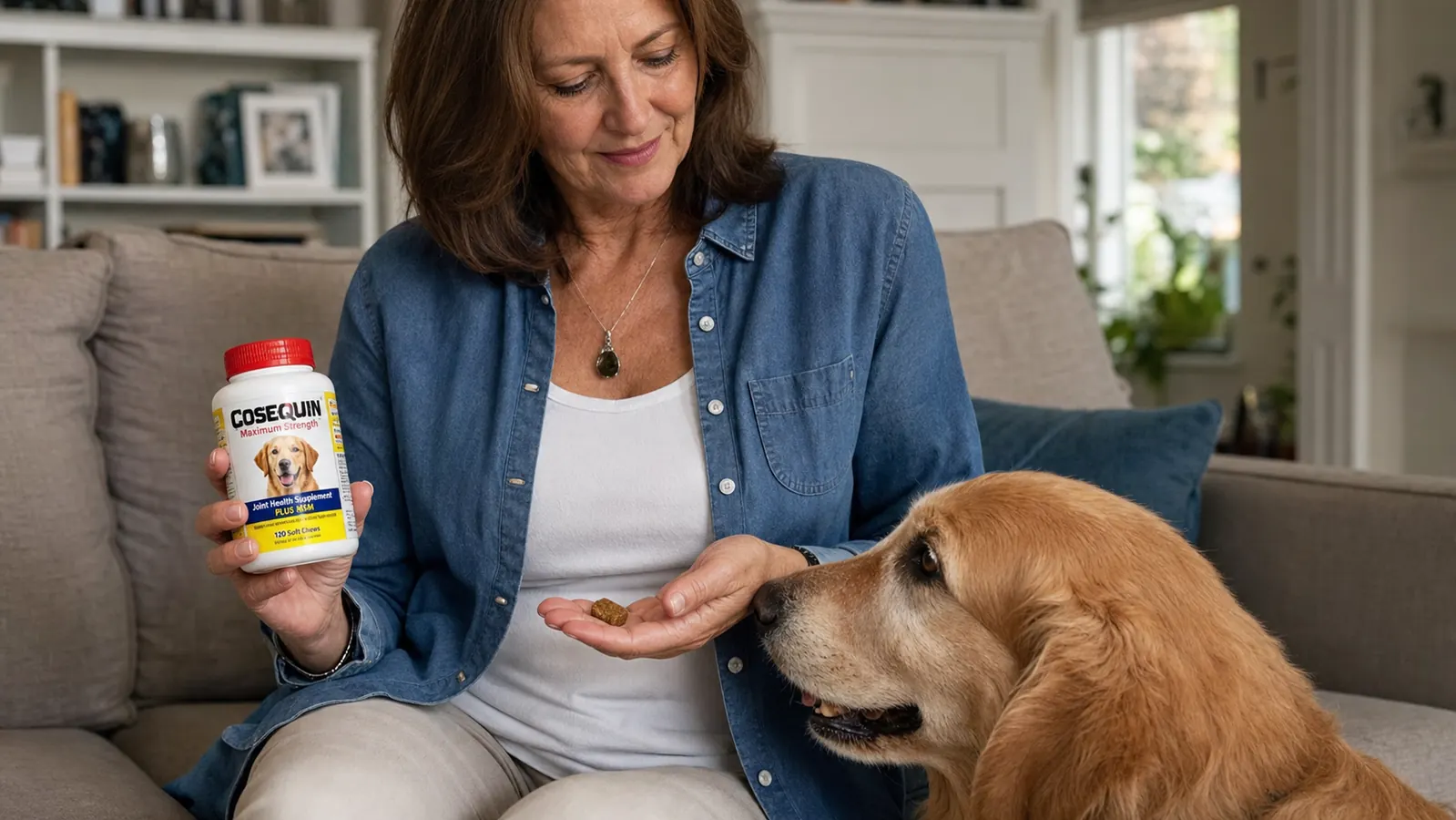
Mabel came to me barely able to push herself up off the floor. By week ten on Cosequin, she was trotting to the door when she heard the leash. That is the version of this supplement I want you to know exists.
The Honest Results I Have Seen Across Different Dogs
Mabel, the 10-year-old Beagle mix with elbow arthritis, had the most visible turnaround I have seen from Cosequin. Her foster file said she had been on no supplements previously and her prior owner had not realized how much pain she was in. She came to me reluctant to go down stairs and moving in a way that my vet described as guarding her front end. After a vet checkup and green light to proceed, I started her on the appropriate dose for her weight. By week five I noticed she was initiating getting up rather than waiting until she had no choice. By week ten she was trotting to the door when she heard the leash. That is the version of this supplement I want you to know exists.
Goose, the 112-pound Mastiff mix, was a more complicated story. He had significant hip changes that his vet assessed as moderate to severe, and at his size the mechanical load on his joints was real. Cosequin helped take the edge off for him, and his vet felt it was worth continuing, but we also had to combine it with weight management, shorter but more frequent walks, and eventually a prescription pain medication on his harder days. Cosequin was part of the picture for Goose, not the whole picture. I tell you this because if you have a large, heavy dog with advanced joint changes, managing your expectations matters.
I also want to mention a 7-year-old Golden Retriever named Peanut, who I fostered as a pre-emptive case. Her rescue coordinator flagged her as a breed at high risk for early joint trouble and she was not showing symptoms yet. I gave her Cosequin for the eight weeks she was with me and she left looking exactly like she arrived: comfortable, mobile, no complaints. That is what proactive supplementation looks like. You will not see a dramatic transformation because nothing needed transforming yet. But you may be buying your dog more good years, which is harder to see and just as worth doing.
What Happens If You Stop Giving It
This one catches people off guard. Cosequin is not a medication you taper or cycle. It is a daily supplement that works by keeping the building blocks available consistently. When you stop, you are not setting anything back dramatically overnight, but you are removing the ongoing support. Most dogs with active joint changes will start showing increased stiffness again within a few weeks to a couple months of stopping.
I learned this the hard way with a foster named Ringo, an 11-year-old Labrador Retriever who came to me from another foster home that had been giving him Cosequin for several months. His notes said he was doing well. I ran out of the bag they sent and waited about three weeks before I restocked, figuring I would get to it. By week two of the gap, Ringo was noticeably stiffer in the mornings than he had been. I do not know for certain the gap caused it, but the timing was pretty clear. Now I keep a backup bag and reorder when I am halfway through the current one.
What I Liked
- Backed by published clinical research using the specific trademarked ingredient grades in the formula
- Most dogs take the chews willingly with no pill-hiding required, which matters for a supplement you give every single day
- Available in large bulk sizes that bring the daily cost down to something genuinely reasonable
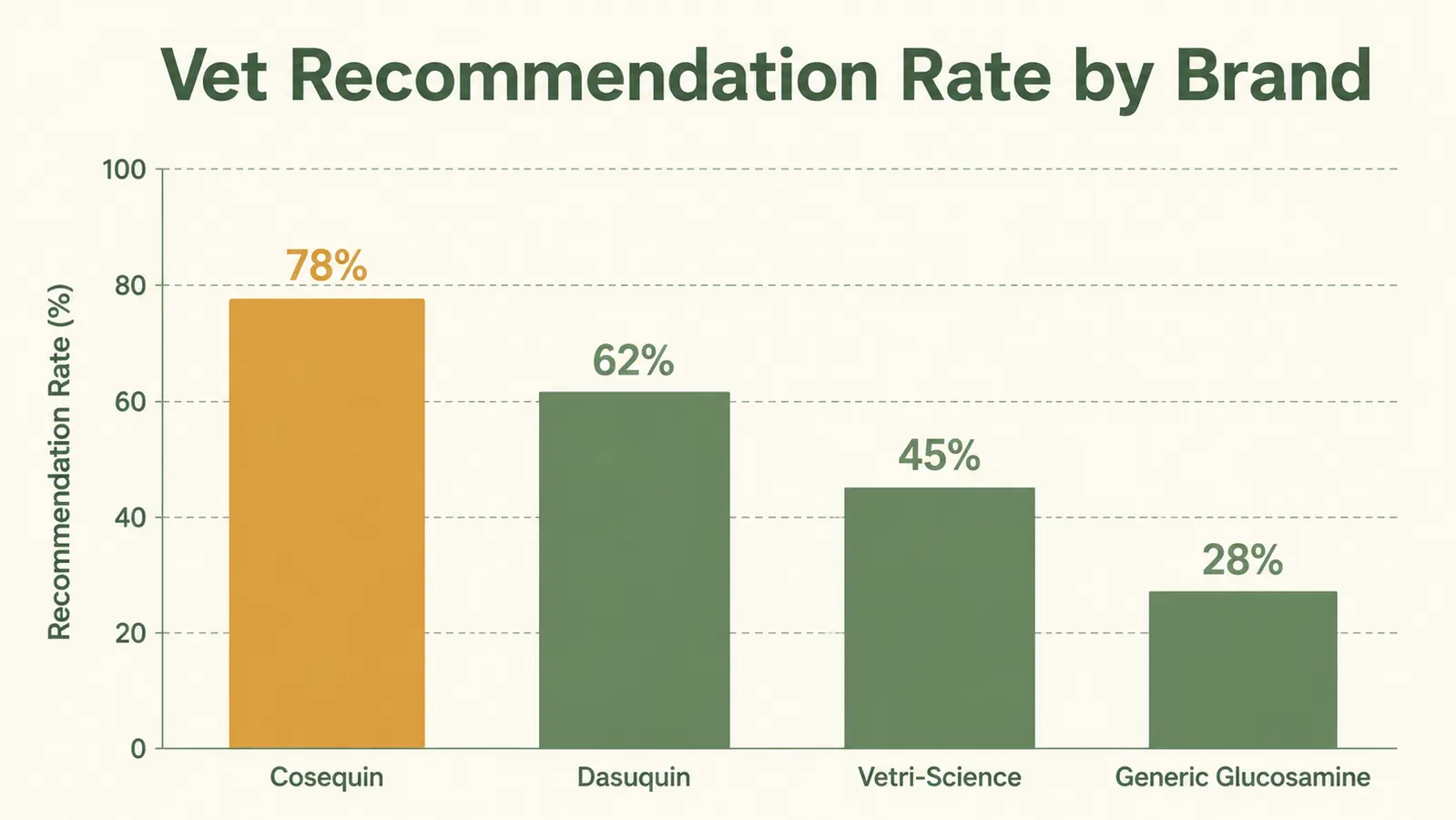
- One of the few joint supplements veterinarians recommend by name rather than just by category
- MSM addition in the DS Plus formula makes it appropriate for dogs already showing symptoms, not just early prevention
Where It Falls Short
- Results require 6 to 12 weeks of patience, and people who quit early miss the actual benefit
- Does not help dogs with severe or end-stage arthritis who need prescription pain management, not a supplement
- Glucosamine is shellfish-derived, which matters for dogs with shellfish sensitivities
- The small count sizes are expensive per chew, the cost math only works when you buy the large bag
The Buying Mistake Most People Make
The most common Cosequin purchasing error I see is buying the small bag to test it, deciding it is too expensive, and switching to a cheaper alternative. Here is the problem with that logic: by the time the small bag is finished you are at four to six weeks and barely starting to see results. And the per-chew cost on the small bag is significantly higher than the larger sizes. If you are going to try Cosequin, buy the 250-count bag from the start. The per-chew cost drops considerably and you have enough supply to actually run a fair trial. Buying the 60-count as a test and then concluding it is too expensive means you never gave the supplement a real chance and you paid more per dose for the privilege.
Store the bag in a cool, dry location. I keep mine in the pantry rather than on the counter near the stove. The chews stay fresh for a long time, and the larger bag will last a medium-sized dog well past the initial loading window and into the maintenance phase where you will actually have data on whether it is working for your specific animal.
Who This Is For
Cosequin DS Plus MSM is a strong match for dogs seven and up who are showing the early signs: slow to rise from a nap, hesitant on inclines, stiff for the first few minutes after resting, or flagging on walks that used to be easy. It is also a reasonable choice for large breeds over 40 pounds as a proactive supplement starting around age six or seven, before symptoms show. In those cases you are not trying to reverse damage, you are trying to slow the timeline, and that is a legitimate use of the product. Talk to your vet, get their read on your specific dog, and then set a 10-week calendar reminder before you evaluate.
I also think it is a good choice for anyone who has tried a cheaper or store-brand joint chew and not gotten results. Sometimes the answer is not that glucosamine does not work, it is that the grade and quality of ingredients in the cheaper option did not do much. Upgrading to Cosequin and giving it a proper trial has changed the picture for more than one dog in my foster network. Before concluding the whole category is useless, try the version with clinical backing. Want to compare it against the other popular option at your grocery store? I put together a full breakdown at Cosequin vs VetIQ joint chews that walks through the ingredient and cost differences clearly. And if you are not sure whether your dog is even at the point where they need a supplement yet, check out my piece on 10 signs your dog needs a joint supplement.
Who Should Skip It
Do not start Cosequin in place of a vet visit if your dog is showing significant pain. A dog that is limping, crying when touched, or has stopped putting weight on a leg needs a diagnosis, not a supplement. Cosequin is appropriate for mild to moderate joint maintenance, not for managing acute pain or masking a condition that needs medical evaluation. Get the vet visit first.
Dogs on blood thinners or with diagnosed clotting disorders should have their vet weigh in before starting chondroitin, as it has mild anticoagulant properties. And if your dog has a shellfish allergy that you know about, ask your vet about shellfish-free alternatives before reaching for the standard Cosequin formula. These are not reasons to avoid the product entirely, just conversations to have before you open the bag.
Thirty-plus senior dogs taught me to trust this one. Here is where to get it.
Nutramax Cosequin DS Plus MSM has over 78,000 Amazon reviews and a 4.7-star rating. It is the joint supplement most vets recommend by name, built on the specific ingredient grades used in peer-reviewed research. If your dog is slowing down and your vet gives the green light, this is the place I would start. Check today's price and choose the size that fits your dog and your budget.
Amazon Check Today's Price on Amazon →